Spinach and Almond Pesto Made in a Mortar and Pestle
Last updated: May 2026
Similar to my Almond & Lemon Pesto, this recipe calls for simple and fresh ingredients that are easily available.
Hi, my name is Alessandra Lauria, I am a Sicilian pasta maker expert, a dinner party host, and creator and founder of The Pasta Studio - an online (and offline) pasta school. As my roots are Sicilian, I tend to share what’s locally delicious to me. Hope you will enjoy it as much as I do!
I love making this pesto and adding it to pasta, especially since all the ingredients are easy to find all over the world. This is important to me as I travel often and live abroad. Italians can’t live without basil but if I’m somewhere that doesn’t have it, I will use spinach as a substitute. Even though this recipe has a bit of basil, you can leave it out if you’re unable to buy it.
Making this (and any) pesto in a mortar and pestle is always better. The colors will be more vivid and the flavors more robust. As usual, add the dry and solid ingredients first before adding veggies and the Extra Virgin Olive Oil.
In this recipe, you should pre-grate the parmesan before starting the process as it is easier when adding it into the mortar. Also, you can chop the spinach after you steam them.
Why in the KROK
Spinach is more fragile than basil and turns slimy the moment it is overworked. A food processor whips it into a dull, watery purée that separates within minutes. The KROK's cool granite and heavy pestle bruise the wilted spinach just enough to break it down without destroying it, preserving a thick, spoonable consistency. Almonds are softer than pine nuts but still require real crushing to release their oils. The unpolished Thai granite interior grips them so they don't slide around under the pestle, and the 3-cup bowl gives you the surface area to gradually swirl in Parmesan and olive oil. Because the mortar keeps everything cool, the spinach stays bright green rather than oxidizing into a muddy gray, and you can control exactly how chunky or smooth the final texture becomes.
Wash the spinach and cut off the hard stem. Add to a saucepan with a bit of olive oil and let them soften over low heat for a couple of minutes with the lid on.
Grate your Parmesan cheese and prepare all the other ingredients so that they will all be ready.
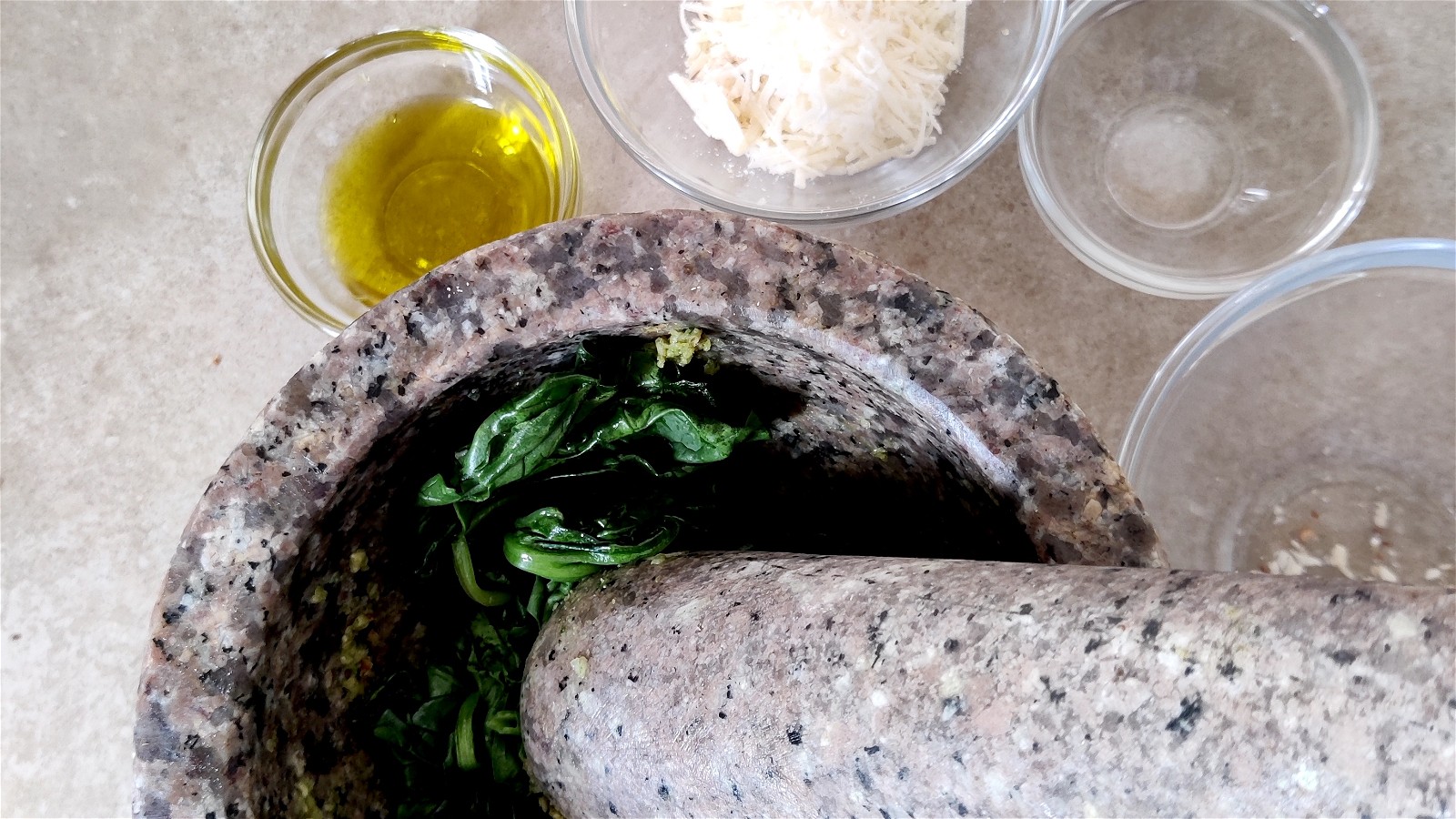
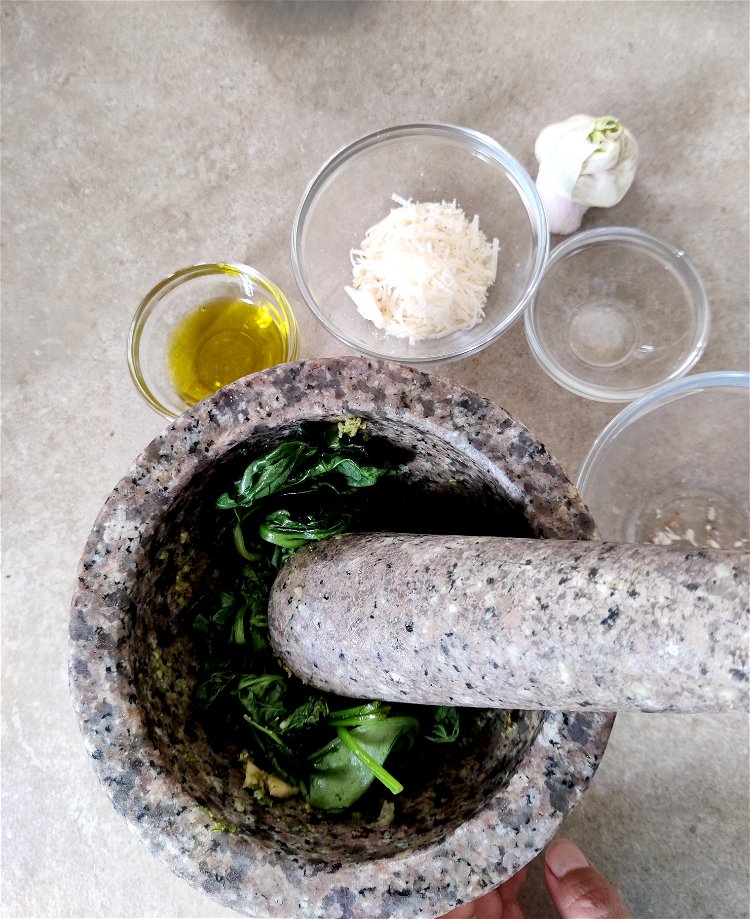
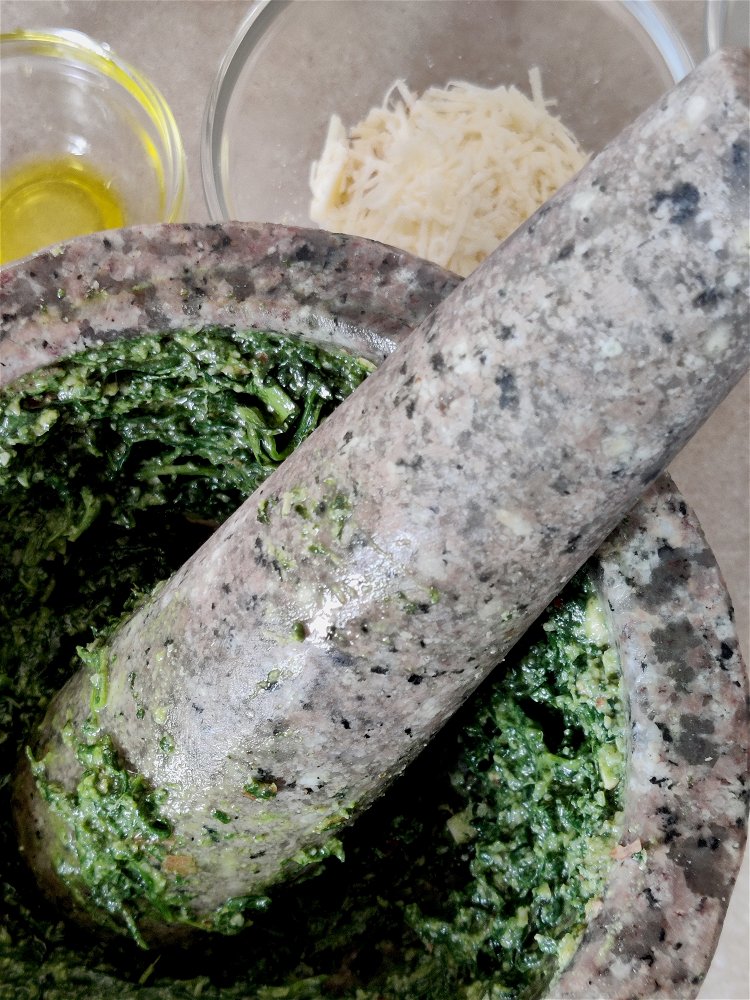
First add the garlic and almonds to the mortar, pounding and grinding down. Next, add the spinach and optional basil and break them down with the pestle.
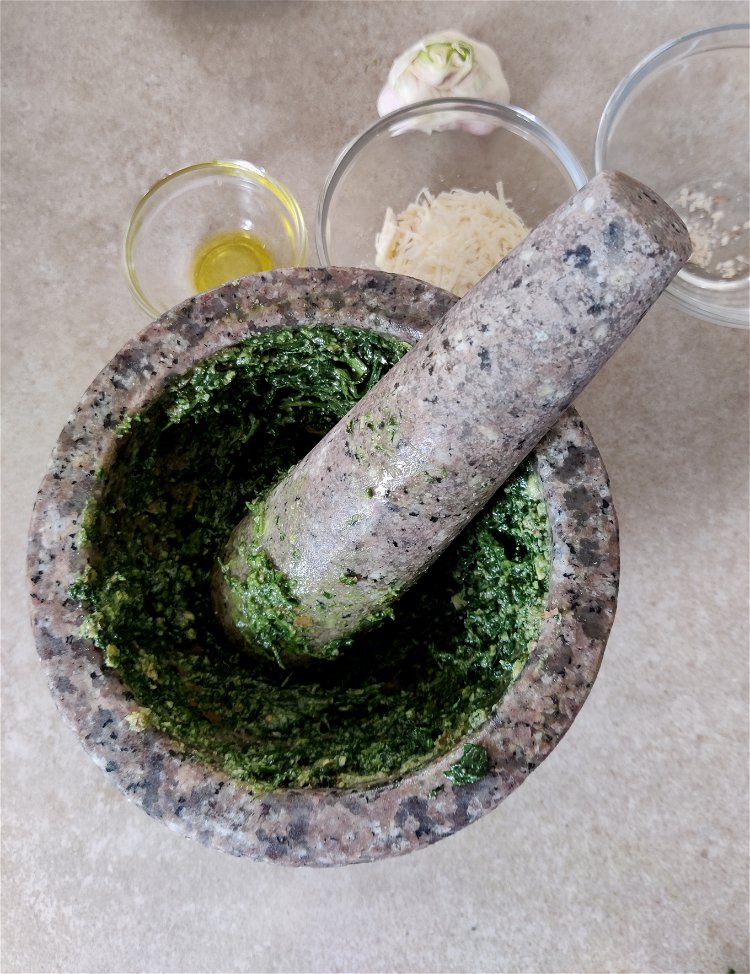
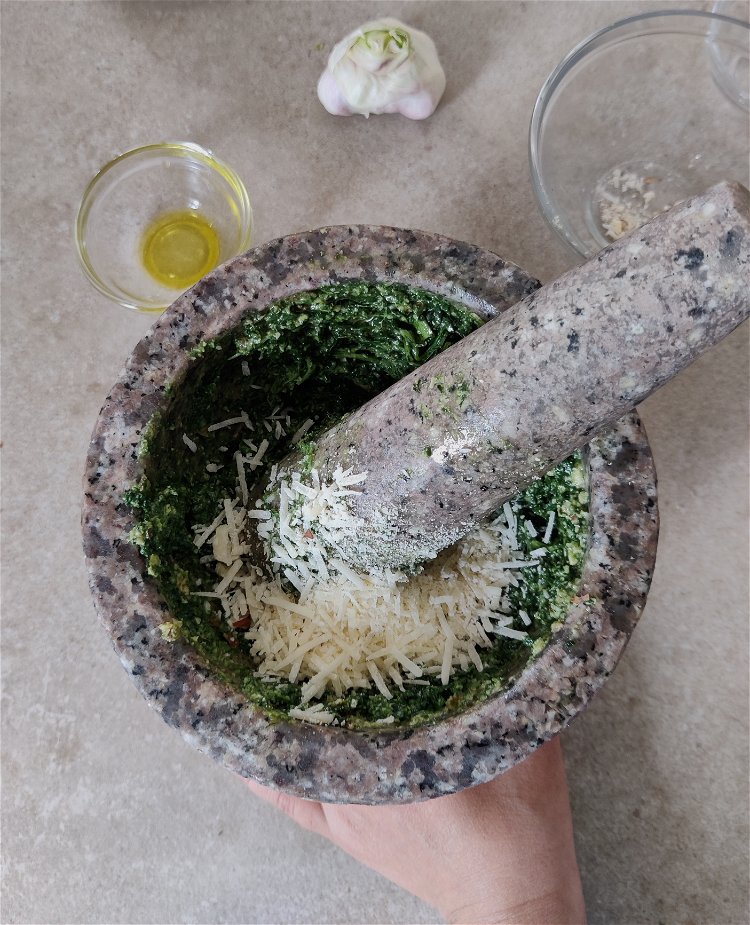
Finally, start adding the Extra Virgin Olive Oil and cheese while mixing with the pestle.
Season to taste with salt and black pepper.
Recipe Note
To make this recipe vegan, remove the cheese and replace it with some toasted breadcrumbs.
Uses:
I love to add this pesto on fresh pasta (with a bit of pasta water) or on top of a piece of toast. It’s also delicious as a base for lasagna with some besciamella!
Frequently Asked Questions
Can you make spinach pesto in a food processor?
You can, but the texture and color will suffer. Spinach is more water-dense than basil, and a food processor turns it into a thin, separated liquid rather than a thick, cohesive pesto. The blades also generate heat that dulls the bright green color and can make the spinach taste metallic. A mortar and pestle bruises the spinach into a textured paste that clings to pasta, and the cool stone preserves the fresh color and flavor.
Is the KROK mortar and pestle good for spinach and nut-based pestos?
Yes. The KROK's dense granite and unpolished interior grip softer nuts like almonds and delicate greens like spinach efficiently, preventing them from sliding around while you crush. The heavy pestle provides the force needed to break down almonds into an oily paste without over-processing the spinach, and the 3-cup bowl accommodates the full volume plus room to emulsify cheese and oil.
How long does spinach pesto last and can you freeze it?
Fresh mortar-made spinach pesto lasts 3–4 days refrigerated in a glass jar with a thin layer of olive oil on top to block air. Because the mortar method creates a thicker, less watery paste than a processor, it stores more compactly and doesn't separate as badly. Freezing is possible in ice cube trays for up to 2 months, though the texture softens slightly upon thawing due to spinach's high water content. Use frozen cubes directly in hot pasta with a splash of pasta water to reconstitute.
Recipes worth grinding for
One new mortar-and-pestle recipe each week, plus 10% off your first KROK order.









Leave a comment