Get 10% off your first order — plus recipes worth grinding for.
Traditional Thai Green Curry Paste Made from Scratch
Last updated: May 2026
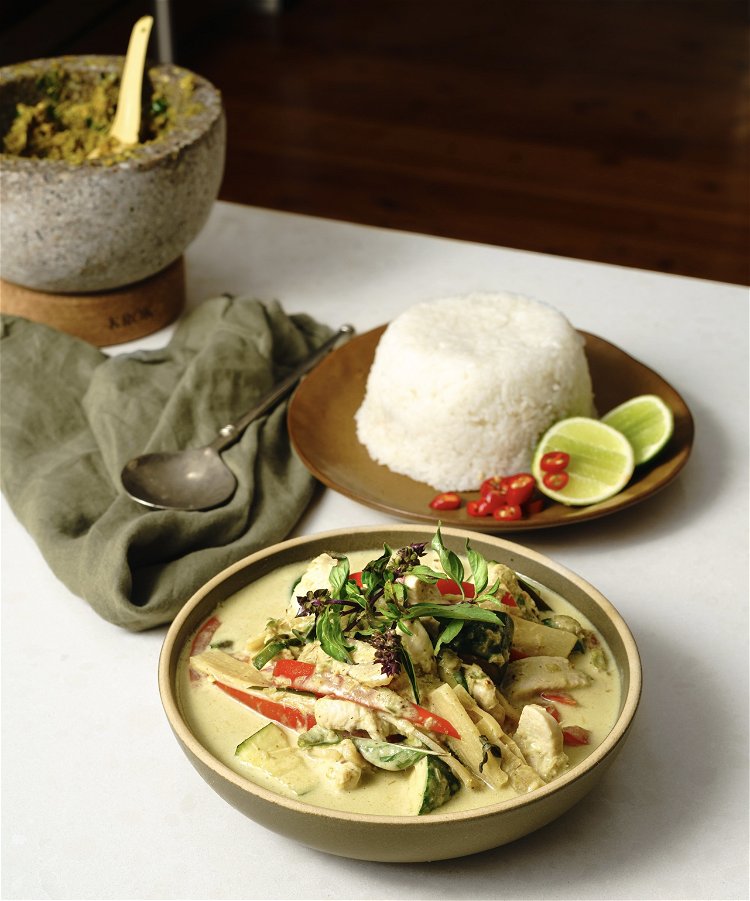
Originating in central Thailand, this classic curry dish derives its name and color from the green ingredients used to make the paste. The green curry paste is fried in oil before adding coconut milk and other ingredients to make the curry dish. Leave out the protein to make it vegetarian but always serve it with steamed jasmine rice.
My name is Breda Fenn. I’m a recipe developer and food creative from Sydney. I adore food from around the world and I’m passionate about bringing flavors from around the globe into my home for my family to enjoy.
Green curry in Thai is called kaeng khiao wan which directly translates to sweet green curry. That said, this dish isn't a sweet dish. It's fragrant, earthy, and spicy (depending on how spicy the chilis you use are).
Most commonly served with jasmine rice, you can also use the paste in fried rice or even noodle dishes.
Even though curry paste can be found in most grocery stores that sell Asian products, nothing beats making your Thai green curry paste from scratch in a mortar and pestle. Not only do you have complete control over spice and flavor, but texture as well. So let's get pounding.
Why in the KROK
Thai green curry paste is a test of endurance. Galangal, lemongrass, and whole spices are dense and fibrous. They will laugh at food processors and fight back against light mortars. The KROK's 3-cup Thai granite bowl handles the full ingredient list without overflow, while the heavy pestle and unpolished interior generate the focused friction needed to pulverize woody stalks into a uniform, aromatic mush. The extra-long pestle keeps your knuckles clear during the heavy vertical pounding this paste demands, and the patented cork base prevents the bowl from skating across the counter when you're leaning into it.
Toast the peppercorns, coriander seeds, and cumin seeds on medium heat until fragrant. Transfer to the mortar and grind into a fine powder.
Add the galangal, lemongrass, garlic, and salt, and pound to break up the fibers.
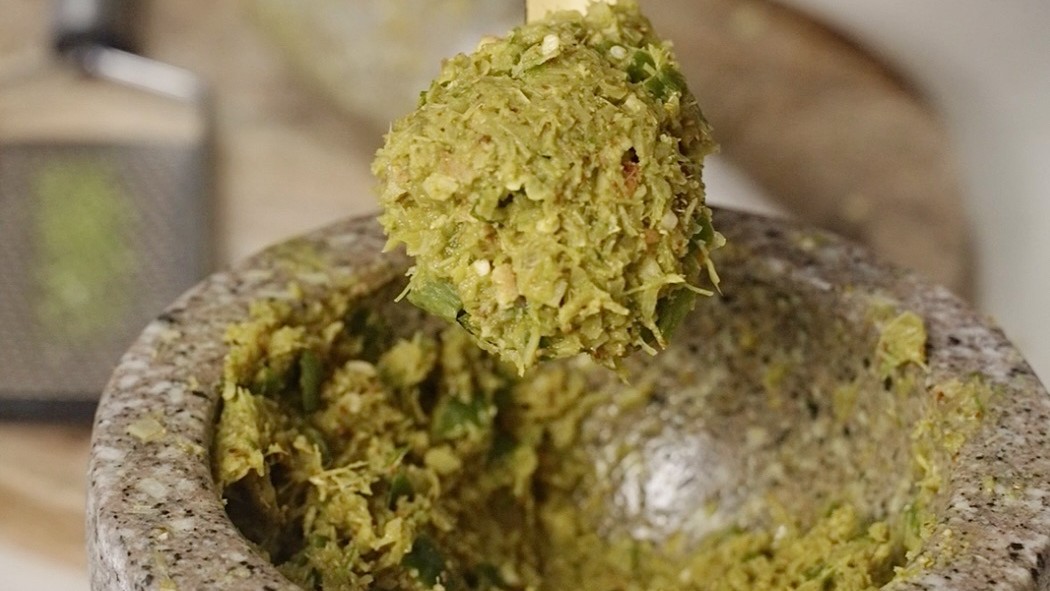
Add the shallots and coriander stalks then pound until you have a rough paste.
Add the chillies, turmeric, lime zest, and shrimp paste. Continue pounding the mix until it forms a uniform paste.
To make the curry, heat a tablespoon of oil in a pan and add 2 heaping tablespoons of the curry paste. Gently fry over medium heat for 1-2 minutes or until lightly colored and fragrant.
Add the coconut milk, fish sauce, and sugar and bring to a simmer.
Next add the bamboo shoots, lime leaves, and zucchini and continue simmering briefly.
Add the diced chicken and capsicum and cook gently until the chicken is just cooked through. Finish with a squeeze of fresh lime and Thai basil.
Recipe Video
Recipe Note
The easiest way to serve this curry dish is in a bowl next to a plate of jasmine rice. If you want to use the curry paste for other dishes, stop after step 4 for just the curry paste.
Frequently Asked Questions
Can you make Thai green curry paste in a food processor instead of a mortar?
You can, but you shouldn't if you care about texture. A food processor slices fibrous galangal and lemongrass into tiny shards that never fully break down, leaving gritty fibers in your finished curry. A mortar and pestle pounds those fibers into submission, rupturing cell walls completely and creating a cohesive paste where aromatics dissolve into the coconut milk rather than floating as woody confetti. The mortar also keeps everything cool; processor blades generate heat that dulls the volatile oils in fresh chilies and herbs.
Is the KROK mortar and pestle good for authentic Thai curry paste?
Yes — it is specifically designed for this task. The 3-cup capacity accommodates the full volume of galangal, lemongrass, garlic, shallots, chilies, and spices without forcing you to work in batches. The dense Thai granite withstands the aggressive pounding required to break down fibrous roots, and the extra-long pestle provides the leverage needed to keep pounding for the 10–15 minutes this paste typically requires.
How long does homemade green curry paste last and can you freeze it?
Fresh mortar-made paste lasts up to 1 week refrigerated in an airtight container with a thin layer of oil on top. For longer storage, freeze in 2-tablespoon portions (an ice cube tray works perfectly) for up to 3 months. Because the mortar method fully pulverizes fibers rather than just chopping them, frozen mortar-made paste reconstitutes more smoothly into coconut milk than processor-made paste, which tends to separate and leave fibrous bits behind.
Recipes worth grinding for
One new mortar-and-pestle recipe each week, plus 10% off your first KROK order.








Leave a comment