Entice customers to sign up for your mailing list with discounts or exclusive offers.
Classic Garlic Aioli Made in a Mortar and Pestle
Last updated: May 2026
Allora!
I’m that Guy from Naples.
As a kid, I’ve always preferred to be in the kitchen with mum rather than playing football on the street, hence my passion for my local Neapolitan food heritage. Later on, living in Southeast Asia for many years, I discovered a new culinary world that made me love food even more. I’m now based in Naples again doing online and in-person cooking classes, catering, and collaborations with local farmers and food artisans.
I’m excited to be part of the KROK family because they value tradition as much as I do, but at the same time, they don’t see it as a limit for innovation.
Aioli is one of the sauces that makes Spain famous in the culinary world. It's used to accompany many dishes with its strong, pungent flavor of garlic. The name, a compound of the Catalan words for garlic and olive oil, says it all.
As often happens with recipes spread across multiple regions, Aioli can vary with added ingredients. For example, in some areas, lemon juice or egg yolk is added to the traditional recipe. This is probably to lessen its strong garlic taste which would be very beneficial for those consuming Aioli on a date!
The version below is the traditional one made only with garlic, extra virgin olive oil, and sea salt. For those of you who are conscious eaters, this ingredient combination makes a perfect, natural antibiotic due to the garlic, a powerful antioxidant due to the EVOO, and a great source of minerals because of the sea salt.
Why in the KROK
Aioli is an emulsion held together by garlic oil and patience, not egg yolk. The KROK's unpolished Thai granite interior grips slippery garlic cloves instead of letting them move around, while the heavy pestle smashes them into a pulp that releases every drop of aromatic oil. Those oils are what emulsify the olive oil drop by drop. Without them, you just have oily garlic soup. The granite also stays cool throughout the process, unlike a food processor that heats up and breaks the fragile emulsion before it ever forms. The 3-cup bowl gives you the surface area to work the oil in slowly with a circular pestle motion, which is the only way to achieve that thick, creamy texture.
Without a doubt, the best way to make Aioli is with a mortar and pestle like your KROK. Only with this tool will the necessary aromas and oils from the garlic be extracted without compromising the final product. These oils will later help emulsify the sauce when adding your olive oil drop by drop until you reach that perfect creamy texture.
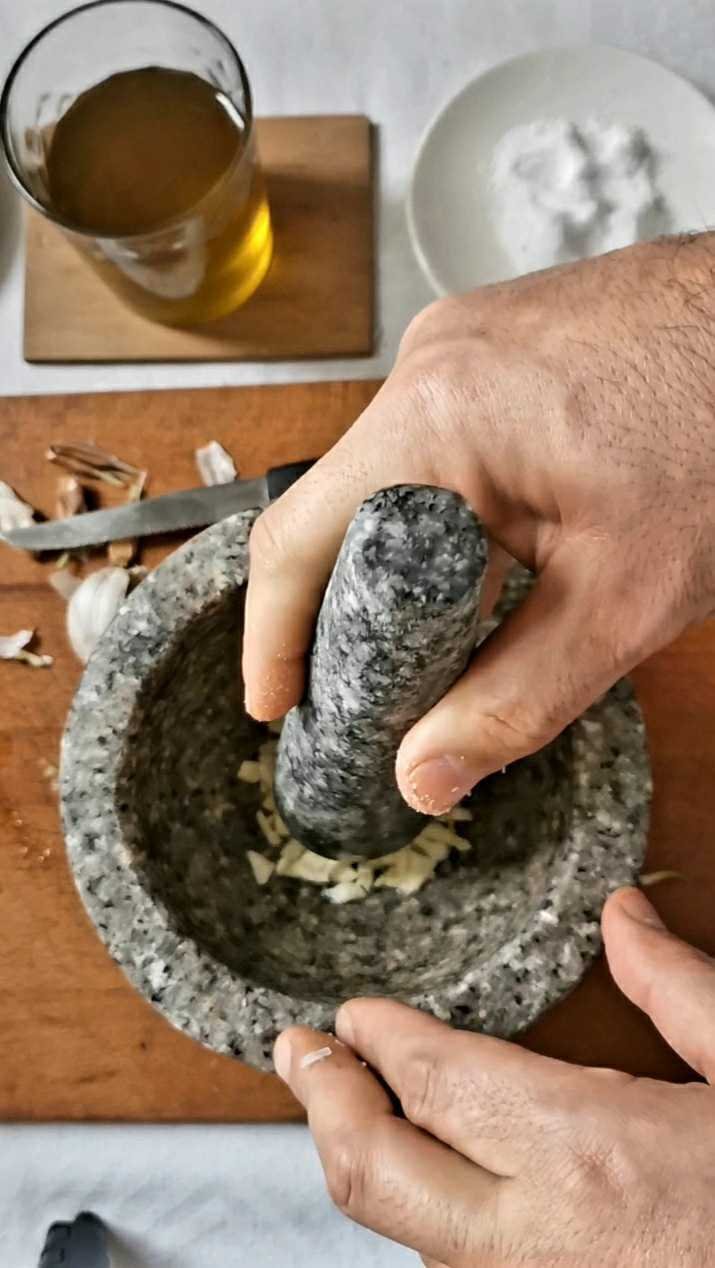
Peel the garlic, cut them in half and remove the core. Start to pound it until you reach a rough paste.
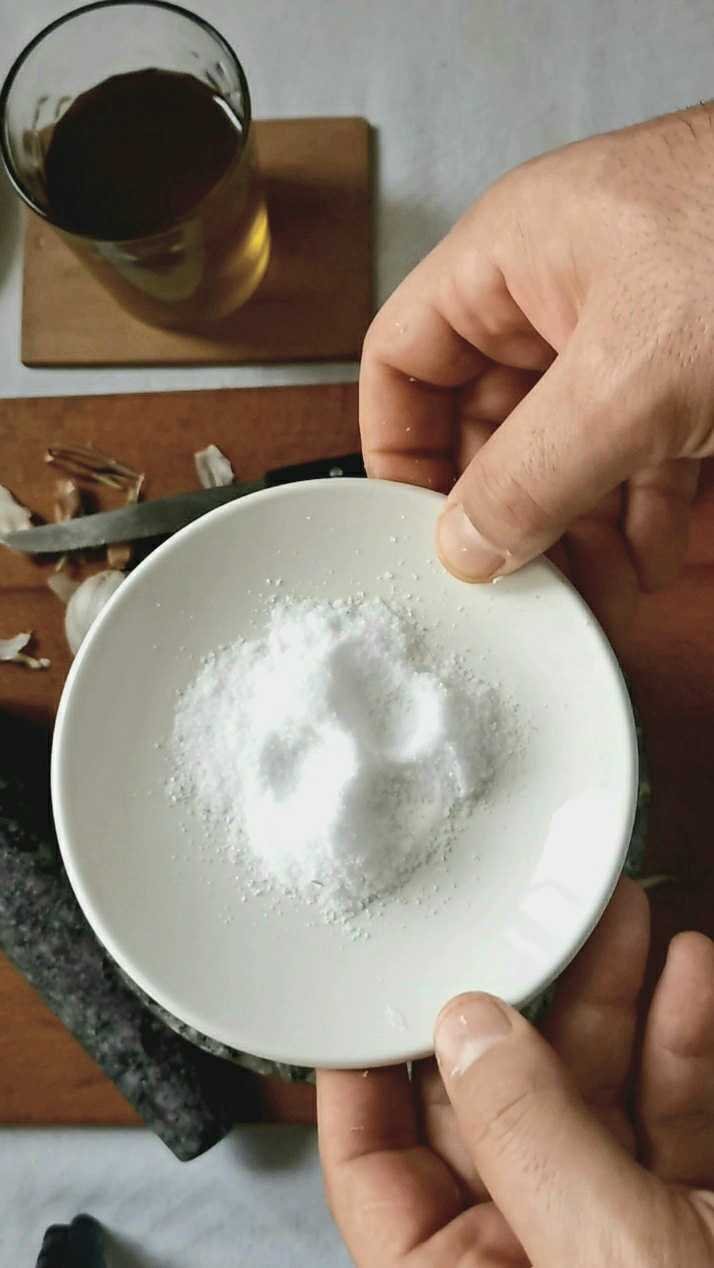
Add a pinch of salt and continue to pound it until you get a soft paste.
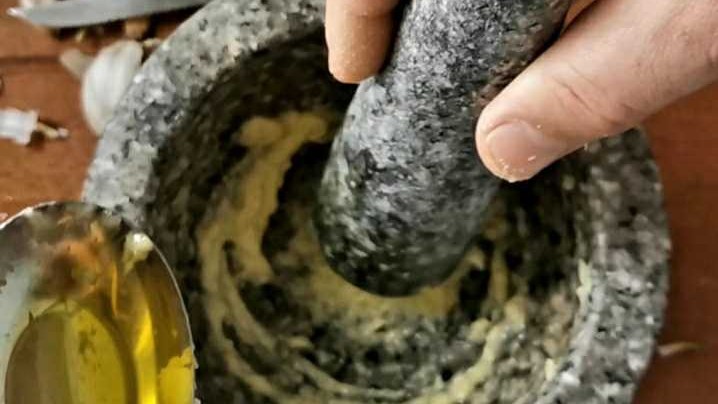
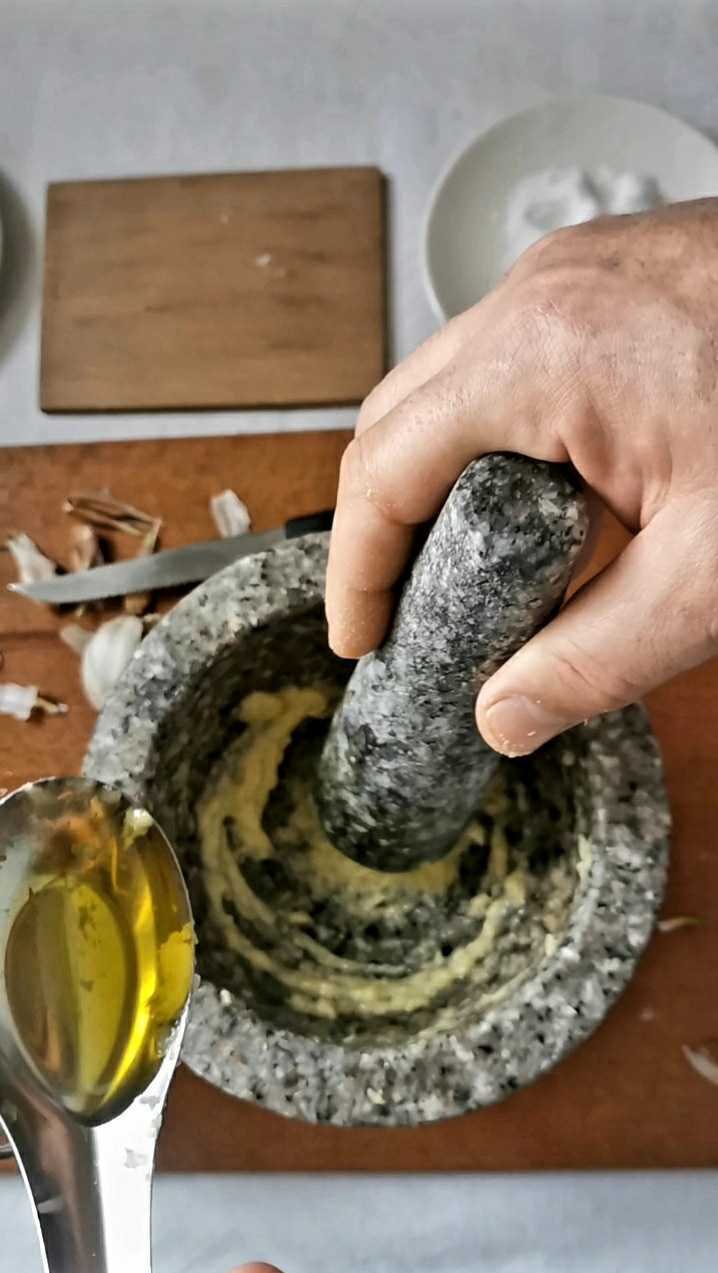
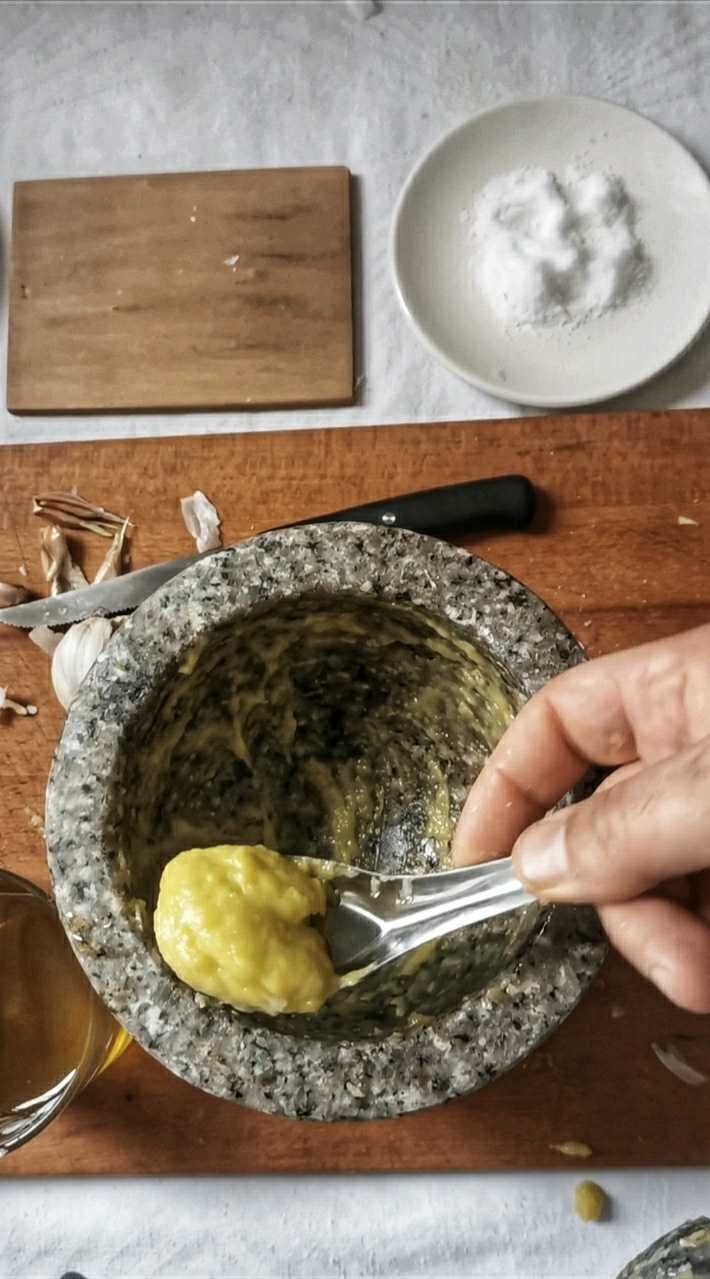
Add the olive oil drop by drop while rotating your pestle in a way that the garlic paste will absorb the oil slowly and gently. Take your time here; the more love you give to it the more love you will receive while eating it.
When you reach a creamy, soft texture…your job is done!
Recipe Video
Recipe Note
To make sure that your final result will be at its best, use the ingredients at room temperature (especially the olive oil).
You don't have to eat it all at once! Aioli can be stored in the fridge for 3-4 days.
Hasta luego!
Frequently Asked Questions
Can you make aioli in a food processor?
Technically yes, but it will not have the same texture, flavor, or stability. Food processor blades slice garlic rather than crushing it, which releases far less of the sticky, emulsifying oils that bind olive oil into a creamy sauce. The blades also whip air into the mixture and generate heat, both of which cause aioli to separate within minutes. A mortar and pestle extracts the full oil content from the garlic and creates a denser, more stable emulsion that holds for days.
Why did my aioli break and how do I fix it?
Aioli breaks when oil is added too quickly, the ingredients are too cold, or the garlic was not smashed finely enough to release sufficient binding oils. If your mixture suddenly turns oily and thin, stop adding oil immediately. In the mortar, you can rescue it by adding one peeled garlic clove or a single drop of cold water and grinding vigorously until the paste re-emulsifies. This rescue maneuver is nearly impossible in a food processor once the emulsion fails.
Is the KROK mortar and pestle good for making traditional aioli?
Yes. The KROK's dense granite stays cool during the slow grinding process, preventing the heat that breaks aioli. The unpolished interior grips garlic cloves for efficient smashing, and the 3-cup bowl provides the surface area needed to incorporate olive oil drop by drop with a swirling motion. The extra-long pestle also gives you the leverage to maintain consistent pressure for the 8–10 minutes this sauce typically requires.









Leave a comment