




Nam Jim Seafood Recipe: Thailand's Famous Seafood Dipping Sauce

If there's one sauce that captures the soul of Thai seafood dining, it's Nam Jim Seafood (น้ำจิ้มซีฟู้ด). This fiery, tangy dipping sauce is the undisputed star of every Thai seafood feast — from beachside restaurants in Hua Hin to family dinner tables across Bangkok. One taste and you'll understand why no steamed crab, grilled shrimp, or fried fish is ever served without it.
Known internationally as Thai seafood dipping sauce, Nam Jim Seafood is a perfect harmony of sour, spicy, salty, and sweet — the four pillars of Thai flavor. Unlike bottled sauces, the authentic version is always made fresh, pounded by hand in a mortar and pestle to release the essential oils from chilies, garlic, and coriander roots. That's what gives it its unmistakable depth and aroma.
What Makes Nam Jim Seafood Special?
The magic of this Thai seafood sauce lies in its simplicity. With just seven ingredients and about 10 minutes of hands-on work, you get a condiment that transforms any seafood into something extraordinary. The key is the technique — pounding (not blending) the aromatics coarsely in a granite mortar releases flavors that a food processor simply can't replicate. You get texture, fragrance, and a rustic quality that's at the heart of Thai home cooking.
In Thailand, this sauce goes by several names: Nam Jim Seafood, Nam Jim Talay, or simply Nam Jim. Whatever you call it, it's essential alongside steamed crab, boiled shrimp, grilled squid, fried fish, and even raw oysters.
Ingredients for Nam Jim Seafood
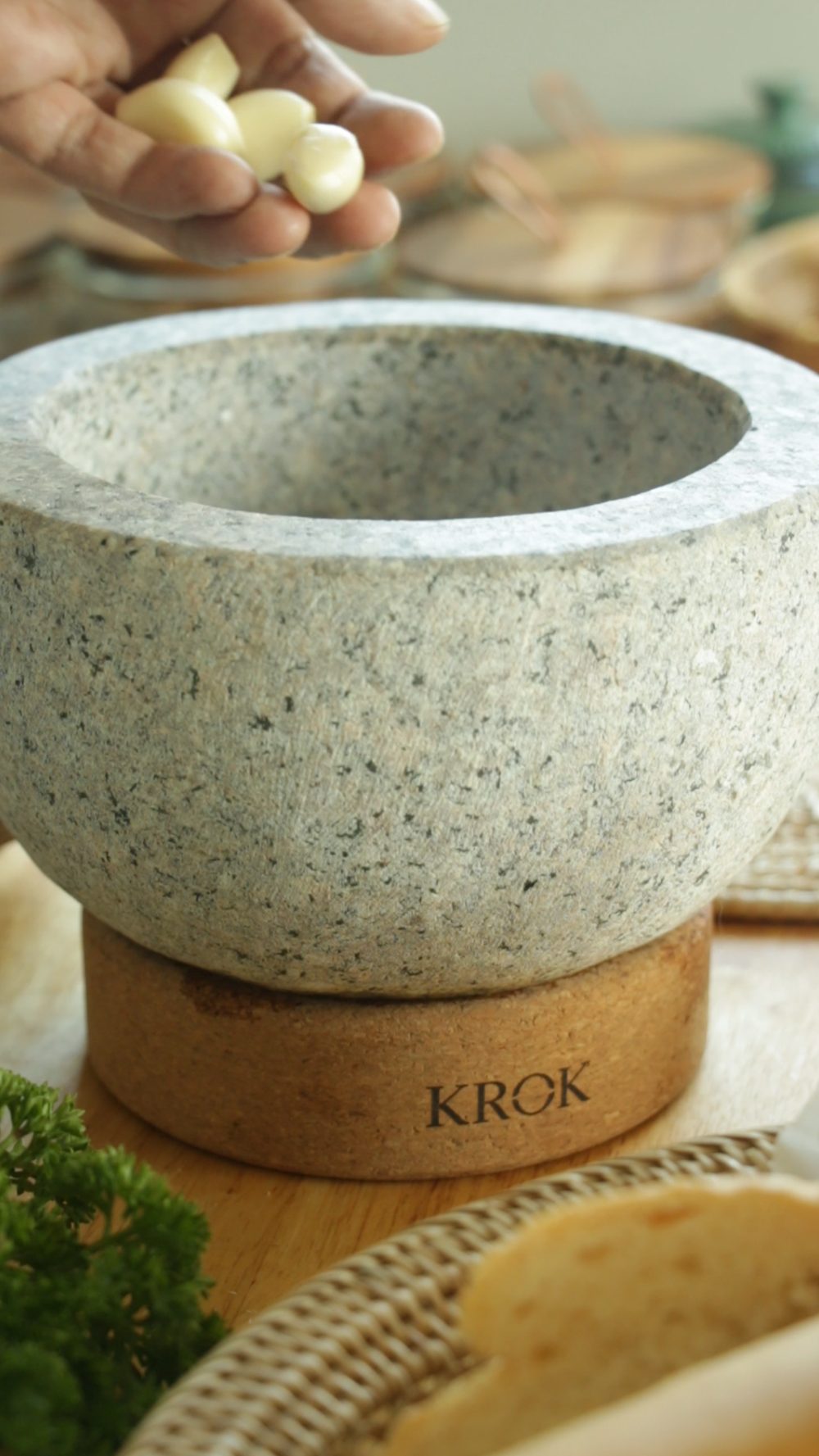
- Coriander roots — 4 roots (wash well; this is the secret ingredient!)
- Garlic — 20g (about 5-6 cloves)
- Red jinda chilies — 30g (for color and medium heat)
- Bird's eye chilies (prik kee noo) — 20g (for serious heat 🌶️)
- Fresh lime juice — 6 tablespoons
- Fish sauce — 4 tablespoons
- Palm sugar — 1 tablespoon
Tip: Can't find coriander roots? Use the bottom 2 inches of cilantro stems as a substitute — they carry similar earthy, aromatic flavor. And if you prefer less heat, reduce the bird's eye chilies by half.
Step-by-Step Instructions
Step 1: Pound the Chilies and Garlic
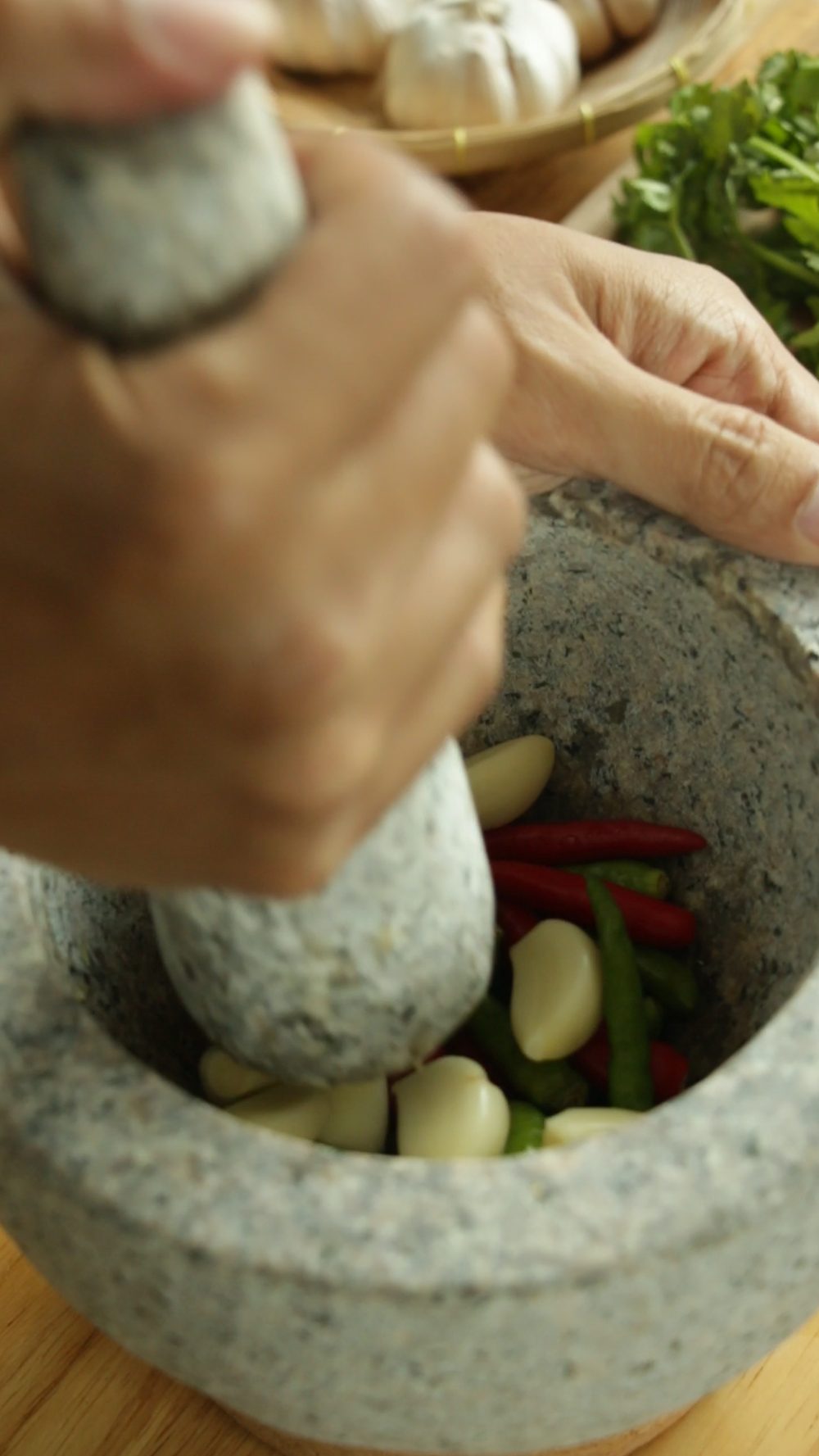
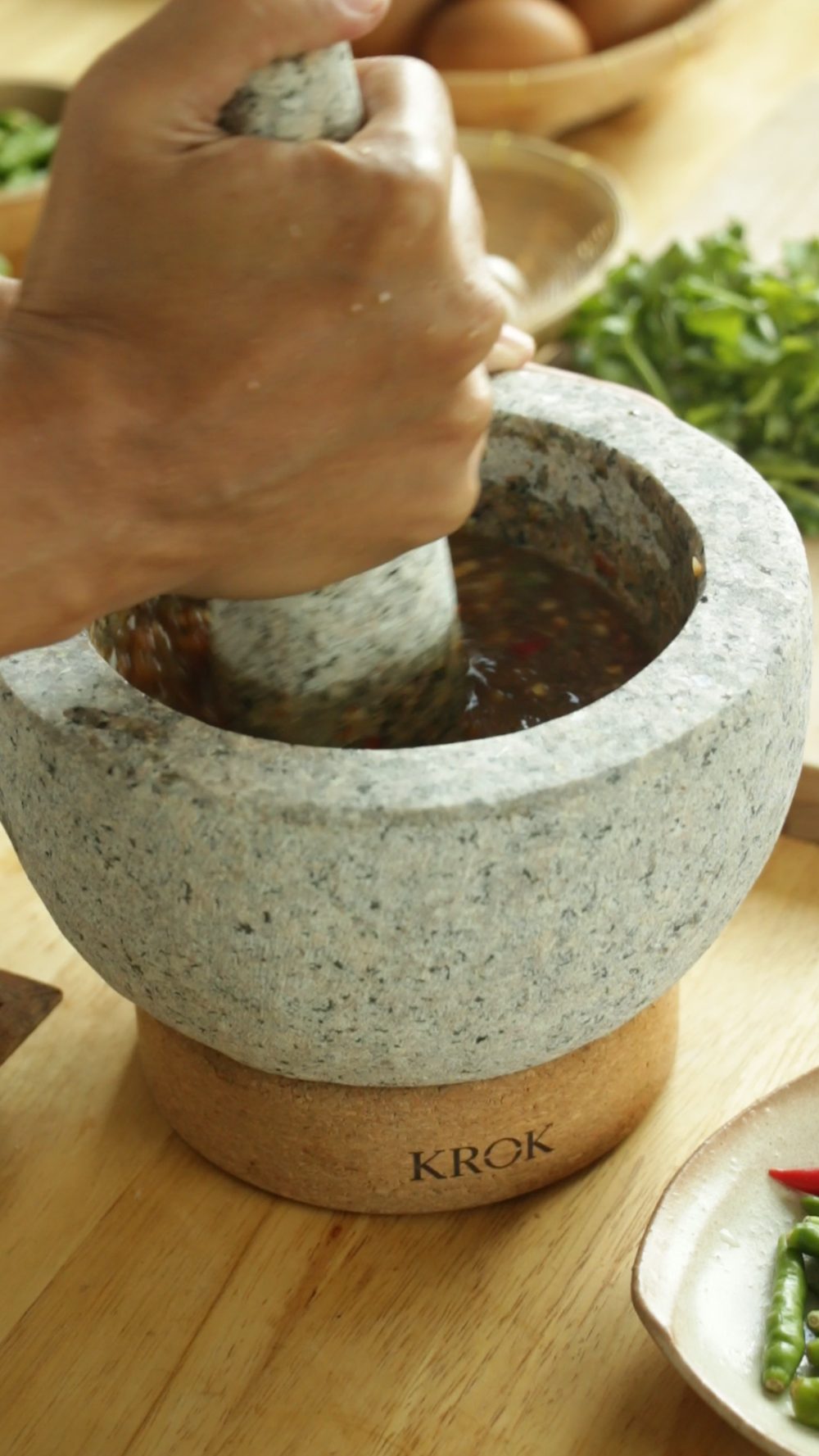
Add the red jinda chilies, bird's eye chilies, and peeled garlic cloves to your mortar. Pound firmly until the mixture is coarsely broken down — you want a rough, chunky paste, not a smooth purée. The coarse texture is what gives Nam Jim its satisfying, rustic character.
Step 2: Add the Coriander Roots
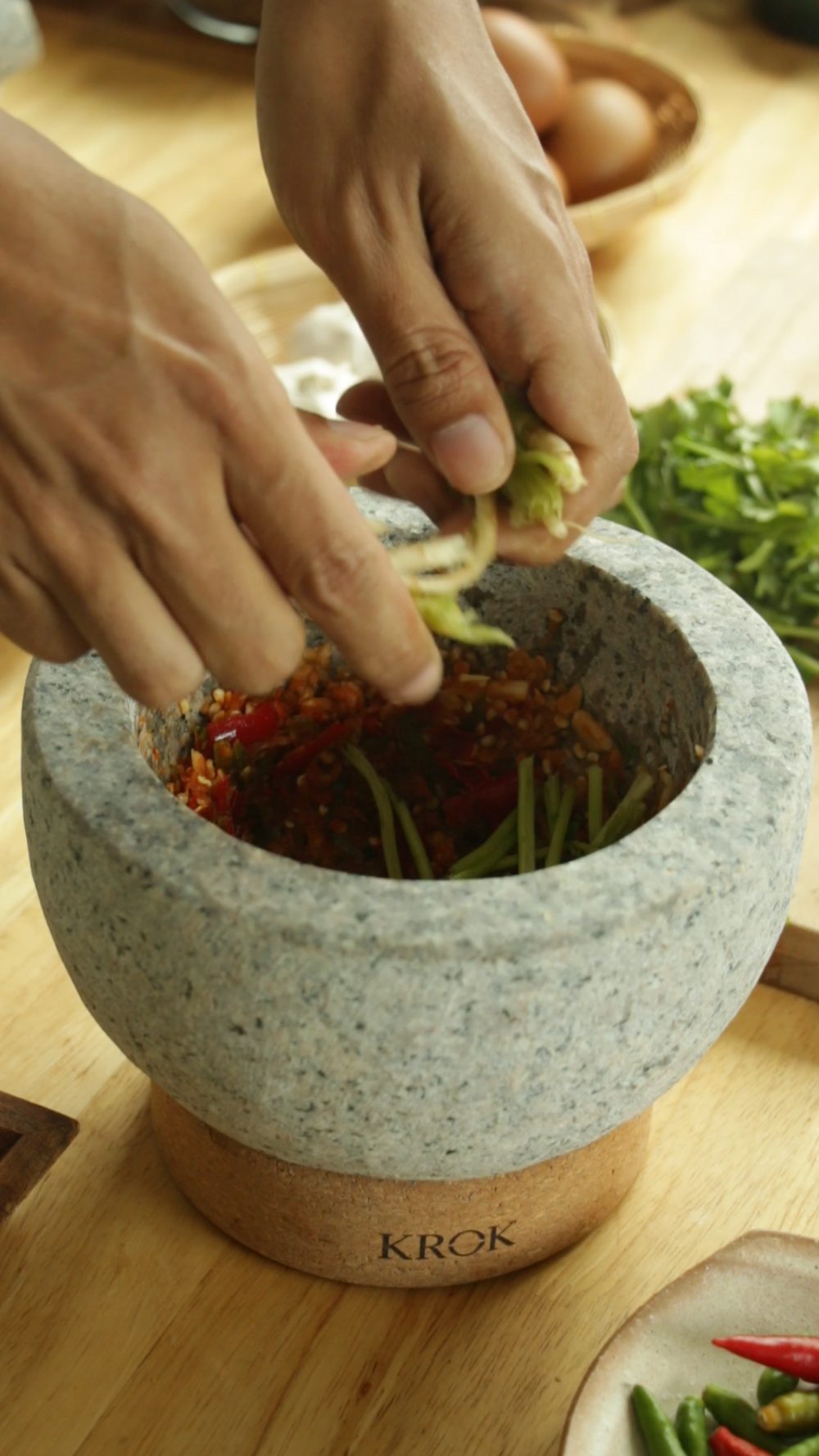
Toss in the cleaned coriander roots and continue pounding. The roots release an earthy, peppery aroma that's completely different from cilantro leaves — this is the ingredient that separates an authentic Thai Nam Jim from imitations. Pound until the roots are well integrated into the chili-garlic paste.
Step 3: Season with Lime Juice, Fish Sauce, and Palm Sugar
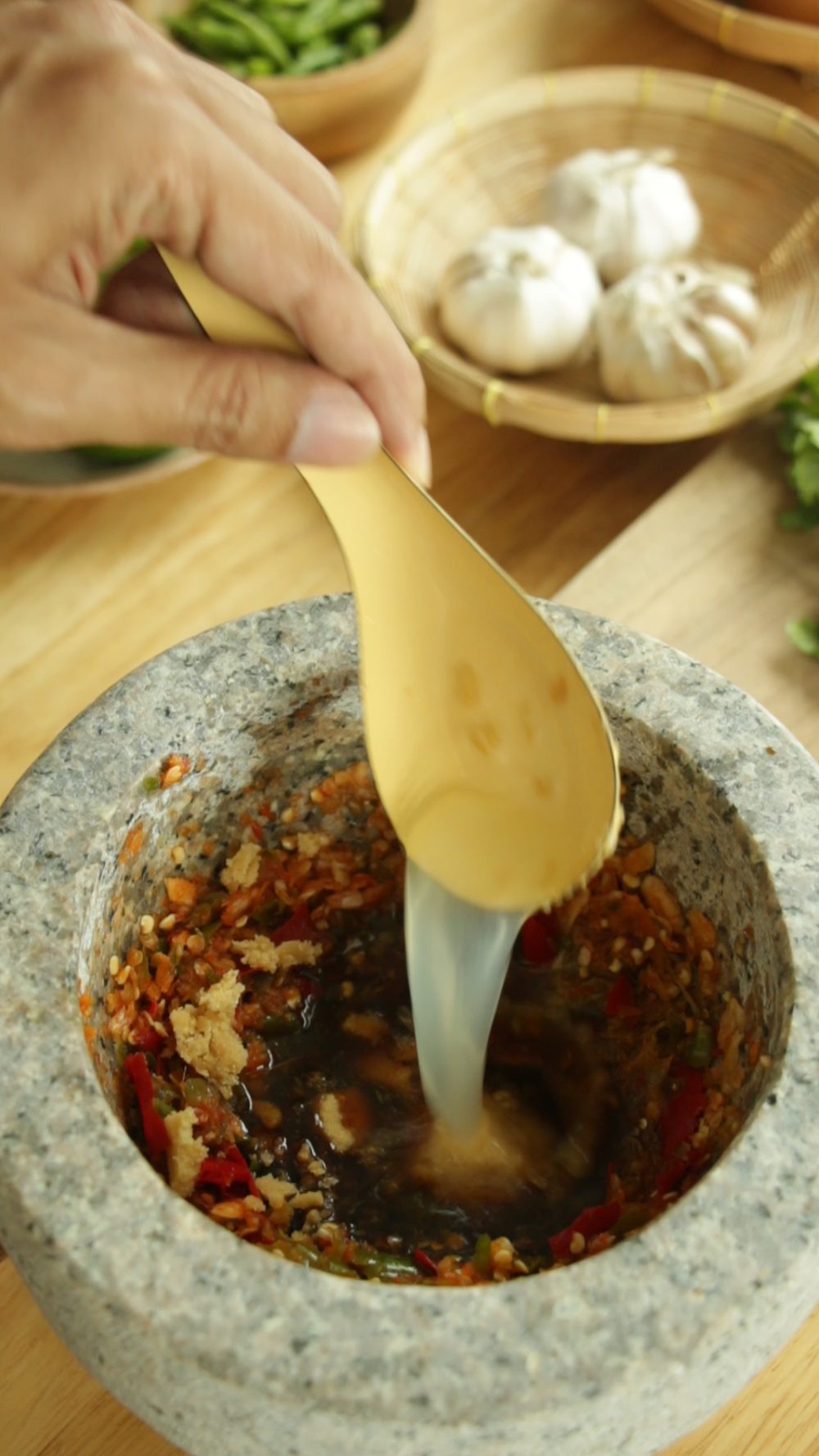
Now add the fresh lime juice, fish sauce, and palm sugar. Use a spoon to stir everything together, pressing and mixing the pounded paste into the liquid seasonings. Taste and adjust — it should be bright and sour first, salty second, spicy third, with just a whisper of sweetness from the palm sugar to round everything out.
Step 4: Mix and Serve
Give the sauce a final stir to make sure the sugar is fully dissolved and all flavors are combined. That's it — your Nam Jim Seafood is ready! Transfer to a small bowl for serving, or keep it right in the mortar for an authentic Thai presentation.
Serving Nam Jim Seafood
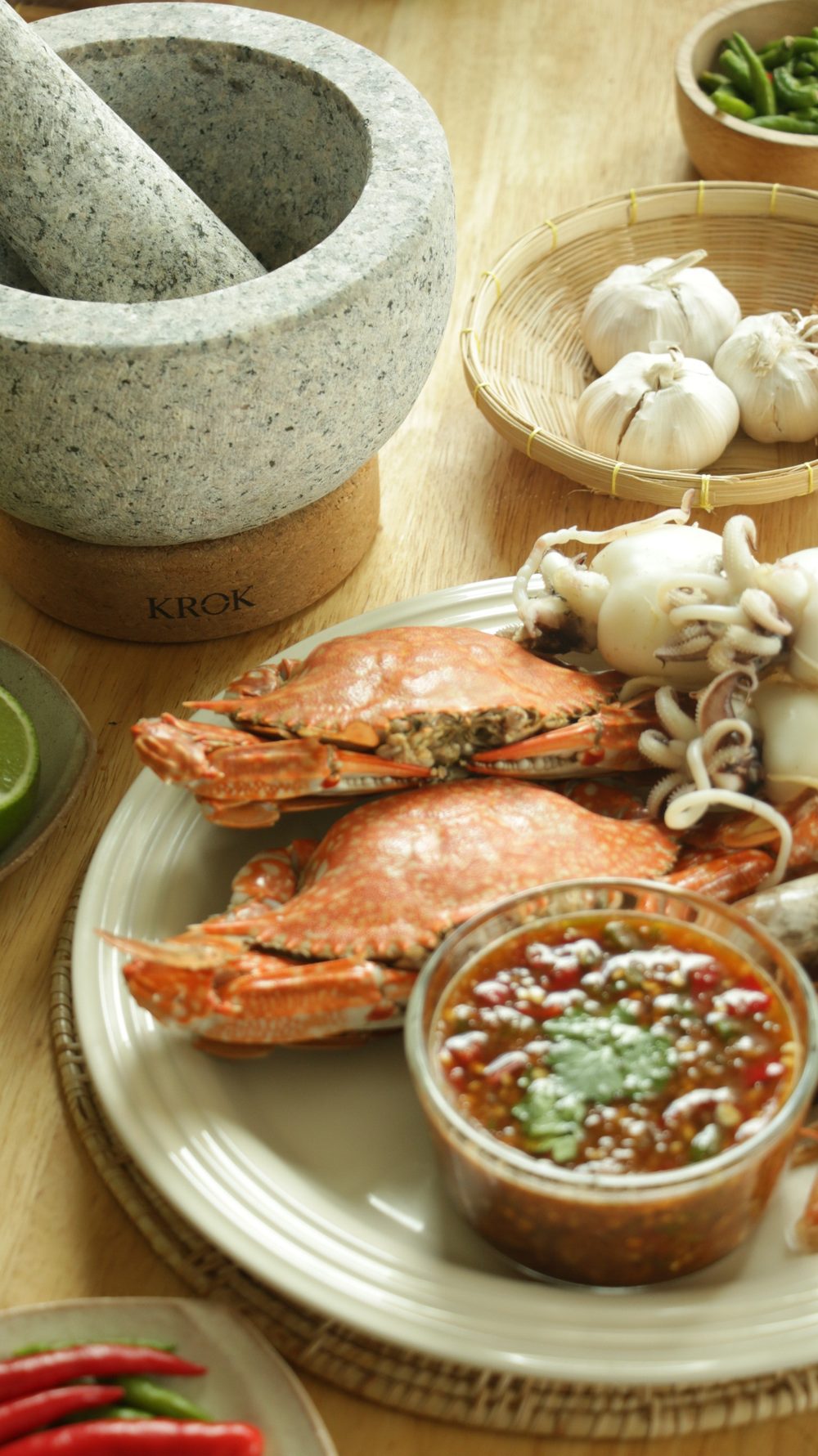
The classic Thai way to enjoy Nam Jim Seafood is alongside a spread of simply steamed or boiled seafood — whole crabs, shell-on shrimp, squid, and mussels. The seafood is kept simple so the sauce can shine.
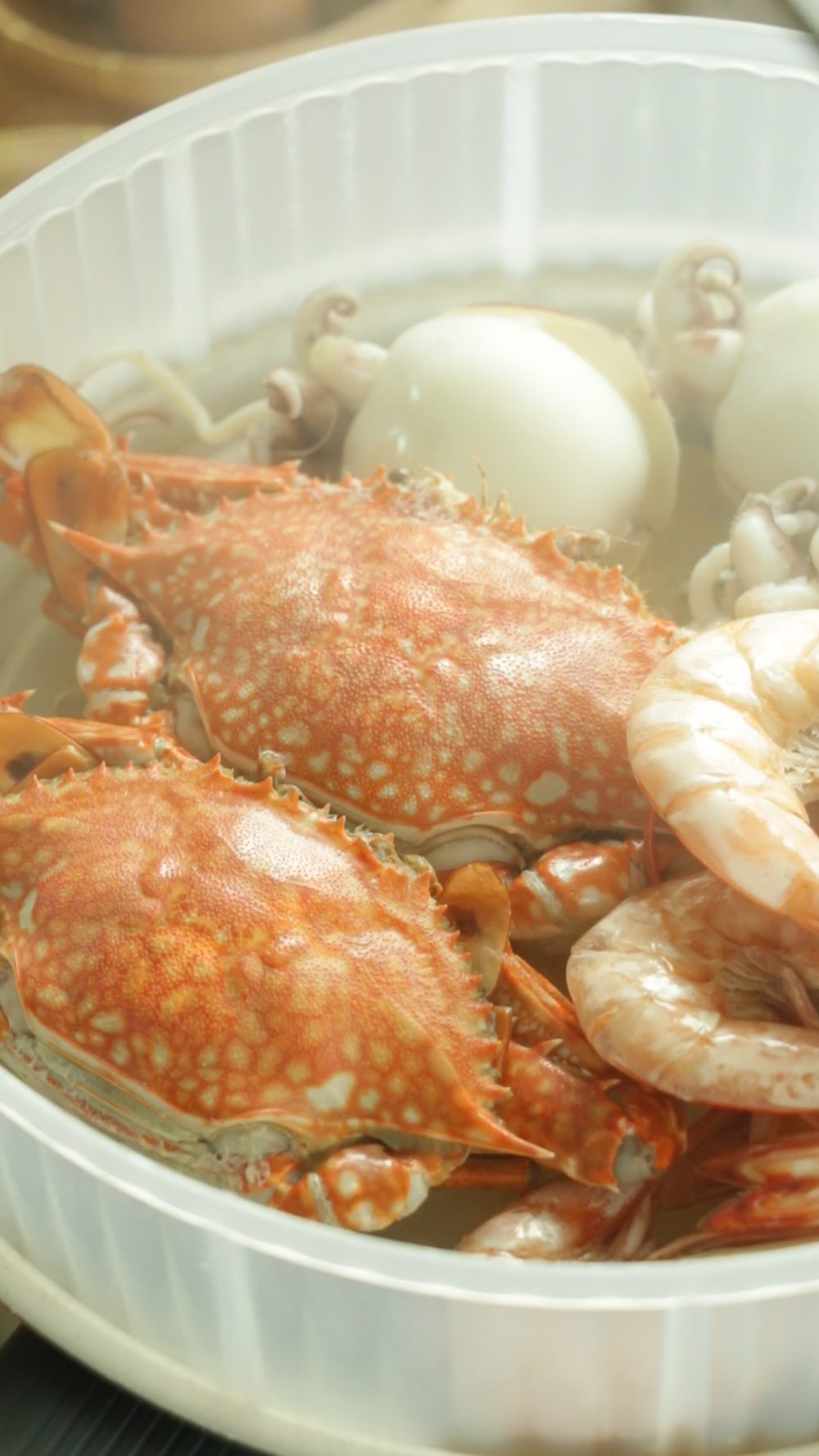
Set out the steamed seafood on a big platter, place the bowl of Nam Jim in the center, and let everyone dig in with their hands. Add wedges of fresh lime, raw vegetables like cabbage or green beans, and a big bowl of jasmine rice on the side. This is Thai family-style eating at its finest.
Tips for the Best Nam Jim Seafood
- Use a granite mortar and pestle. This recipe is specifically designed for pounding, not blending. A heavy granite mortar like the KROK Thai Granite Mortar and Pestle gives you the weight and rough surface needed to crush chilies and garlic to the perfect coarse texture. The difference in flavor between pounded and blended is night and day.
- Make it fresh. Nam Jim Seafood is best eaten within a few hours. The lime juice loses its brightness over time, so pound it just before serving.
- Adjust to your taste. Thai cooking is all about balance. Start with the recipe amounts, then add more lime for sourness, fish sauce for salt, sugar for sweetness, or chilies for heat until it's perfect for your palate.
- Palm sugar matters. Regular white sugar works in a pinch, but palm sugar adds a subtle caramel note that ties the sauce together. Look for it at Asian grocery stores.
- Don't skip the coriander roots. They're the soul of this sauce. Ask your local Asian market — many sell cilantro bunches with the roots still attached.
Why Pound Instead of Blend?
You might be tempted to throw everything in a blender, but there's a reason Thai cooks have used the mortar and pestle for centuries. Pounding ruptures the plant cells differently than blades — it bruises and crushes rather than cutting, which releases more aromatic oils and creates a more complex flavor. The uneven, coarse texture also means every bite is a little different, with bursts of chili heat, pops of garlic, and the fragrance of coriander root.
A quality granite mortar and pestle is the only tool you need. The weight of the pestle does most of the work, and the rough interior surface grips the ingredients so they don't just slide around. It's a one-time investment that opens up hundreds of authentic Thai recipes — from curry pastes to som tum to this very Nam Jim.
Ready to start pounding? Check out the KROK Thai Granite Mortar & Pestle — handcrafted from Ang Sila granite, the same stone Thai families have trusted for generations.
Recipes worth grinding for
One new mortar-and-pestle recipe each week, plus 10% off your first KROK order.


Leave a comment