Entice customers to sign up for your mailing list with discounts or exclusive offers.
Authentic Chimichurri Made in a Mortar and Pestle
Last updated: May 2026
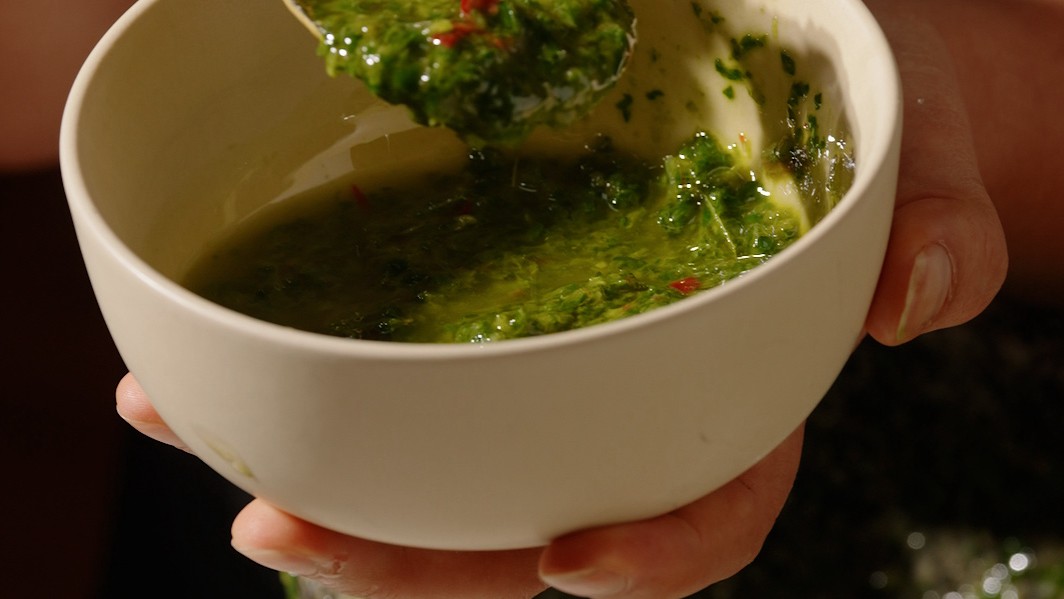
Chimichurri finds its home in Argentine cuisine. A beautifully fresh and flavourful condiment for grilled meats; its main components are parsley, vinegar, and olive oil with some variations and additions like garlic, oregano, and other soft or dried herbs.
My name is Breda Fenn. I’m a recipe developer and food creative from Sydney. I adore food from around the world and I’m passionate about bringing flavors from around the globe into my home for my family to enjoy.
As a lover of strong, vibrant flavors, chimichurri often finds itself front and center of the table at our barbecues. Aussies love their grilled meats, but I have to say, our palate lacks for more homemade condiments. This chimichurri recipe may deviate from tradition, but I love this version that uses ingredients that I almost always have on hand.
Generally made by finely chopping the ingredients by hand, this allows a degree of control over the elements which is more desirable than using a food processor. Using a mortar and pestle gives you the capacity to release more flavor from the herbs and also creates a beautiful texture.
Why in the KROK
Chimichurri lives or dies by how you treat the herbs. A food processor minces parsley and oregano so finely that their delicate cell walls rupture completely, releasing chlorophyll that turns the sauce brown and bitter within hours. The KROK's cool granite and heavy pestle bruise the leaves instead of shredding them, releasing essential oils while preserving structure and color. The unpolished interior grips slippery herbs so they don't swim around in oil, and the 3-cup bowl gives you the surface area to slowly work in vinegar and olive oil with a circular motion, creating an emulsified, spoonable sauce rather than an oily, separated dressing. Because granite stays cold, you can make chimichurri hours ahead of a barbecue and it will still look and taste bright.
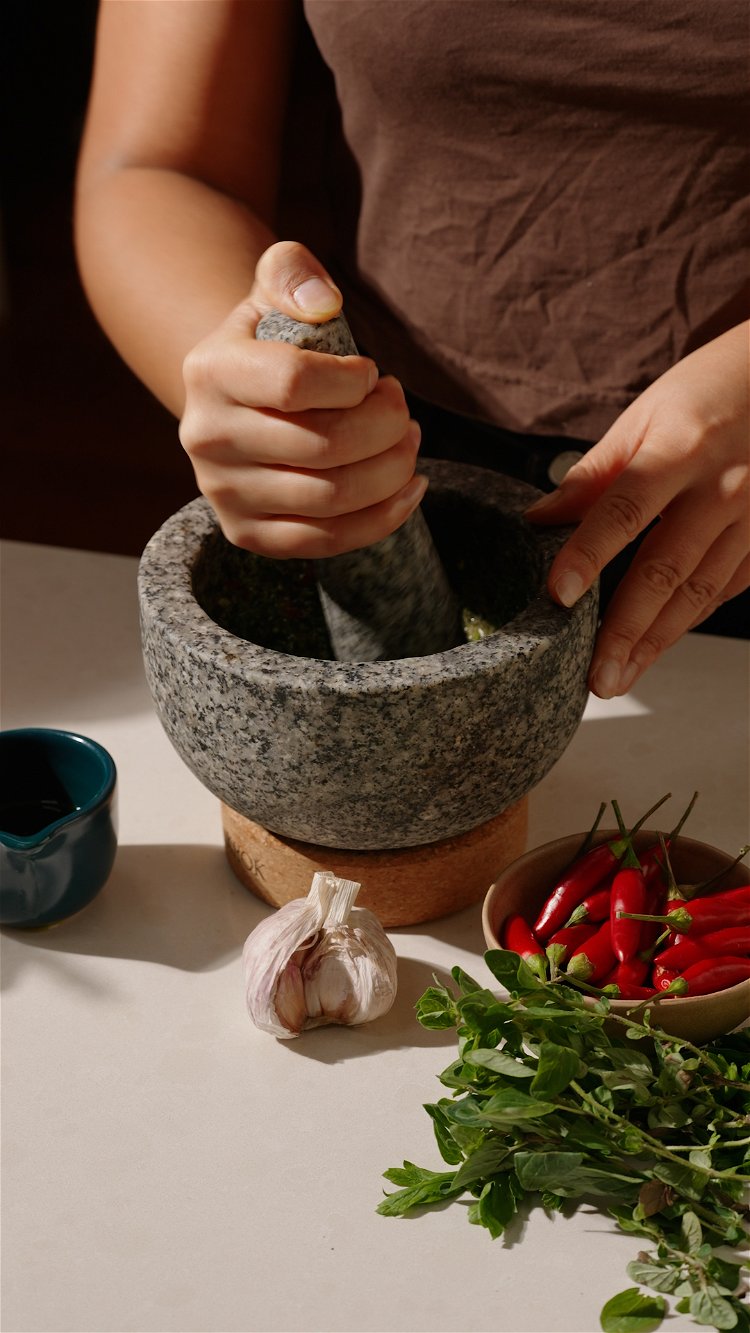
First add the garlic clove to the mortar and use the pestle to crush it briefly to release the skin. Remove the skin.
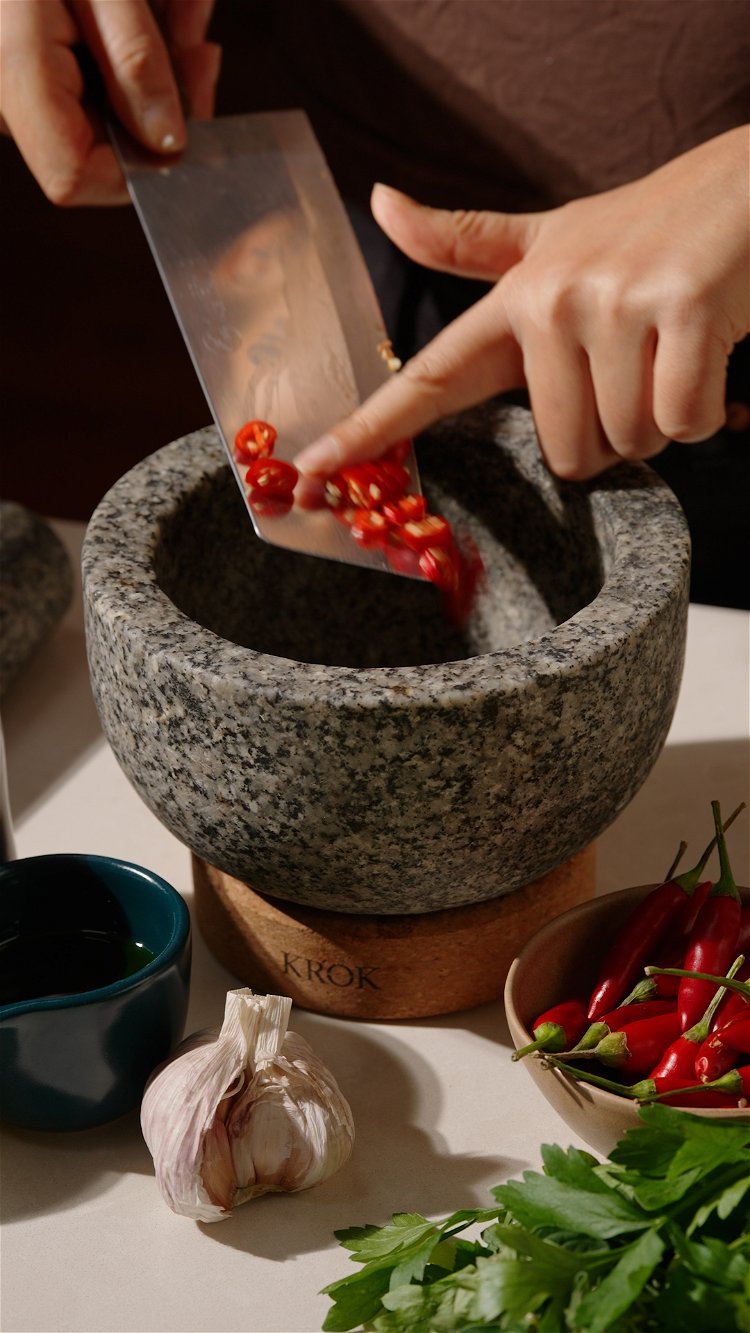
Next, add the chilies and a generous pinch of sea salt. Use the pestle to crush the chilies and garlic.
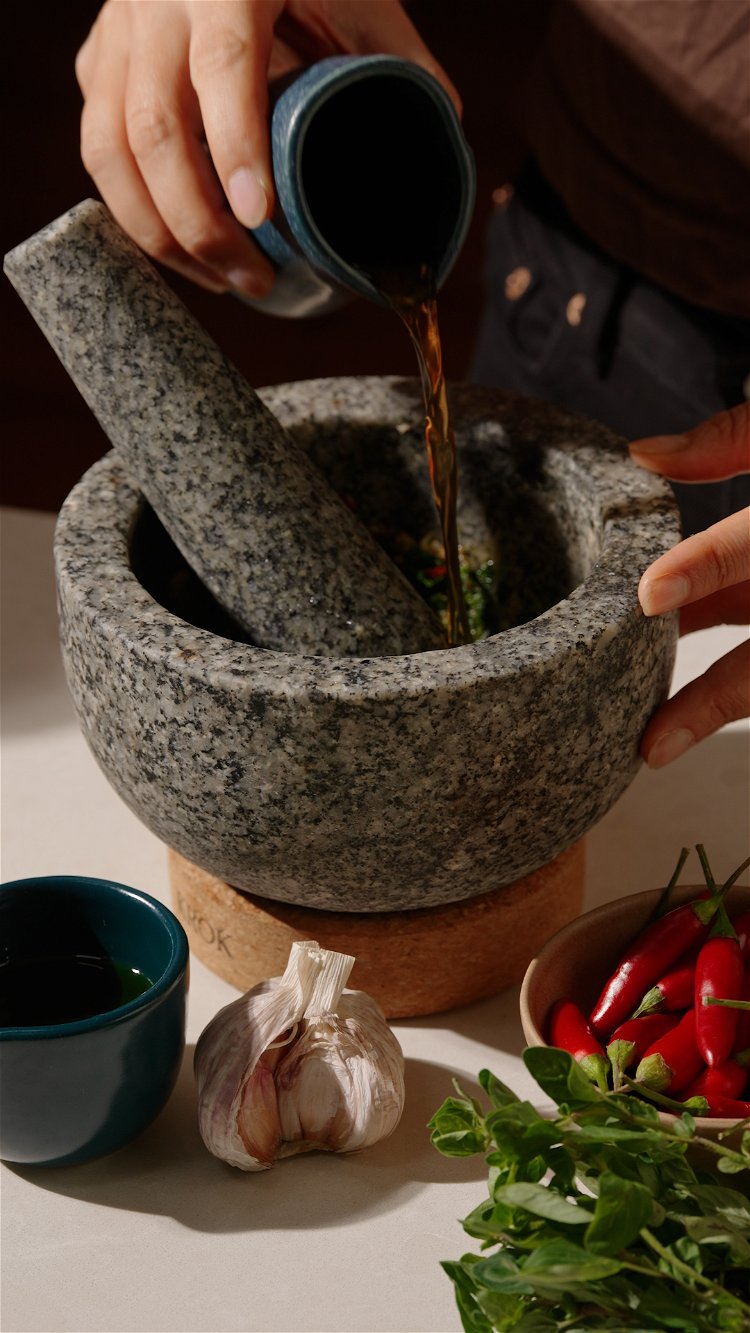
Then add the parsley and oregano and continue to crush until the herbs have broken down to a rough paste consistency. Finally add the lemon juice and vinegar and mix to combine. Slowly pour in the olive oil, stirring with the pestle at the same time until fully combined.
Adjust seasoning to your liking.
Recipe Video
Recipe Note
You can enjoy it immediately, but if you can get ahead of time and allow the sauce to settle for at least a few hours (a couple of days is even better), you’ll be rewarded with a more complex result.
Of course, you can vary this recipe to suit what is available to you and your taste. Use white wine vinegar, for example. Try adding dried oregano instead of fresh or play with different soft herbs like coriander or mint.
This sauce is best served with grilled meats, but it really complements so many different dishes from roast potatoes to toasties and beyond.
Frequently Asked Questions
Can you make chimichurri in a food processor?
You can, but it will turn brown and bitter within a few hours. Food processor blades shred parsley and oregano so finely that they rupture chlorophyll cells, releasing enzymes that oxidize and darken the sauce. A mortar and pestle bruises the leaves just enough to release their oils while preserving texture and color. The result is a vibrant, rustic chimichurri that stays fresh-looking for days.
Is the KROK mortar and pestle good for making chimichurri?
Yes. The KROK's dense Thai granite stays cool during grinding, preventing the heat that bruises herbs and turns them brown. The unpolished bowl grips parsley and oregano leaves efficiently, and the 3-cup capacity provides ample room to emulsify olive oil, vinegar, and lemon juice directly in the bowl without spilling. The heavy pestle also gives you the control to decide exactly how coarse or smooth you want the final texture.
How long does homemade chimichurri last?
Fresh mortar-made chimichurri lasts up to 1 week refrigerated in an airtight container. Because the mortar method bruises rather than shreds the herbs, the essential oils release more slowly and the sauce actually improves over the first 24–48 hours as the flavors meld. For best results, make it a day ahead of your barbecue and let it rest in the fridge. The acidity from the vinegar and the herb oils will settle into a more complex, rounded condiment.








Leave a comment