Entice customers to sign up for your mailing list with discounts or exclusive offers.
Indonesian Sambal: Authentic Chili Sauce Made in a Mortar and Pestle
Last updated: May 2026
Sambal is the umbrella term for any chili sauce or paste in Indonesia. There are hundreds of varieties of sambal from Indonesia alone, but you can also find sambal recipes all across Southeast Asia.
My name is Breda Fenn. I’m a recipe developer and food creative from Sydney. I adore food from around the world and I’m passionate about bringing flavors from around the globe into my home for my family to enjoy. I am half Indonesian. My Dad comes from a small village in South-West Sumatra and he never has a meal without sambal. I have been eating sambal since I was a toddler and can remember it always being a sign of strength if you could eat your sambal without wincing in pain from the heat of it. I was always stoic, of course, but I genuinely loved the intense spice of sambal back then and even more so now. My favorite variation is sambal belacan. This recipe is for a sambal and is a simple, quick, fresh dish that goes nicely with grilled fish or curries.
Using the mortar and pestle to make sambal is the best way to release flavor from the ingredients. I find that simply chopping or using a food processor cuts through the ingredients, but doesn’t extract as much flavor.
Why in the KROK
Sambal is a condiment built on controlled bruising, not destruction. You want the shallots and chilies partially crushed so their oils release into the lime juice and oil, but not pulverized into a watery slurry. The KROK's unpolished Thai granite interior grips slippery chili skins and shallot layers instead of letting them move around, while the heavy pestle gives you the calibrated force to decide exactly how chunky or paste-like each bite becomes. Because the bowl is wide and deep, you can mix in the oil, fish sauce, and lime juice directly in the mortar without overflow. Since granite stays cool, the fresh chilies and shallots don't oxidize or lose their bright heat the way they would in a warm food processor. You can even let the sambal rest and serve it directly from the KROK, which looks beautiful on the table and saves a dish.
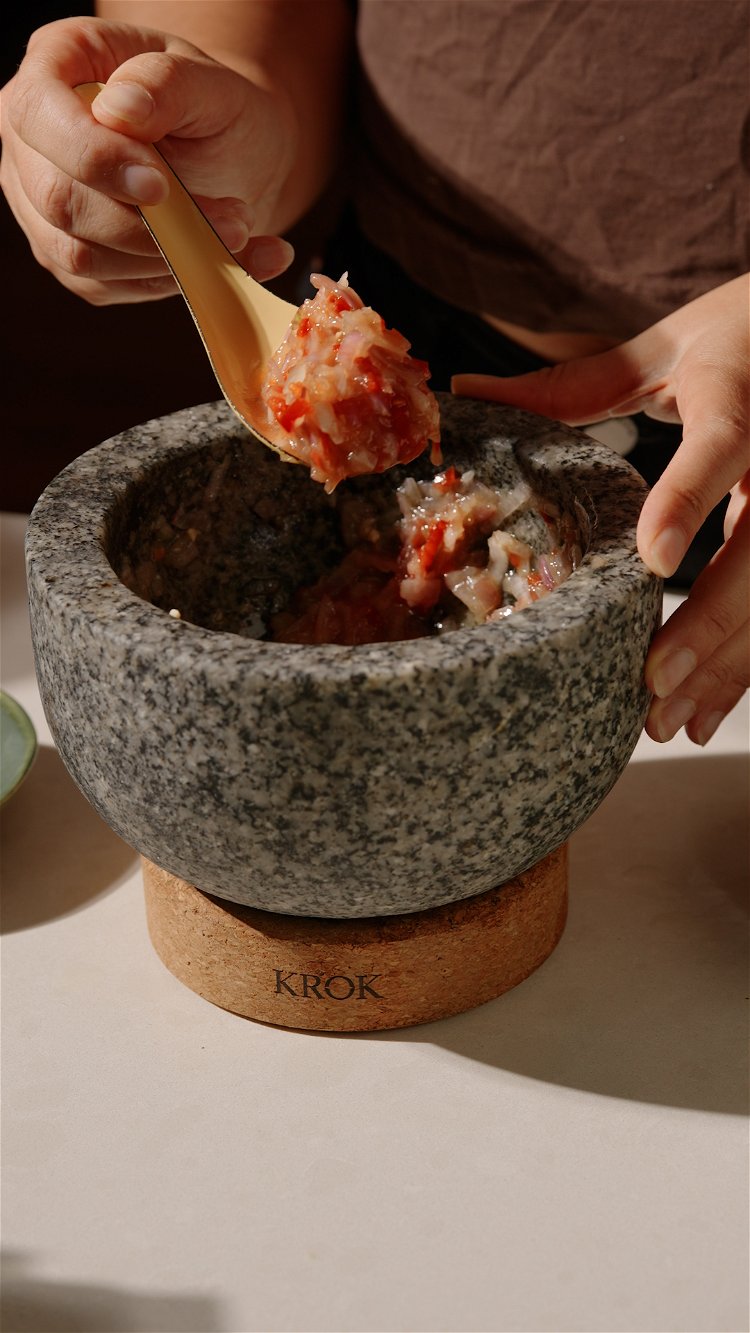
Add the shallots and chili to the mortar with a pinch of salt. Use the pestle to crush gently, forming a rough texture.
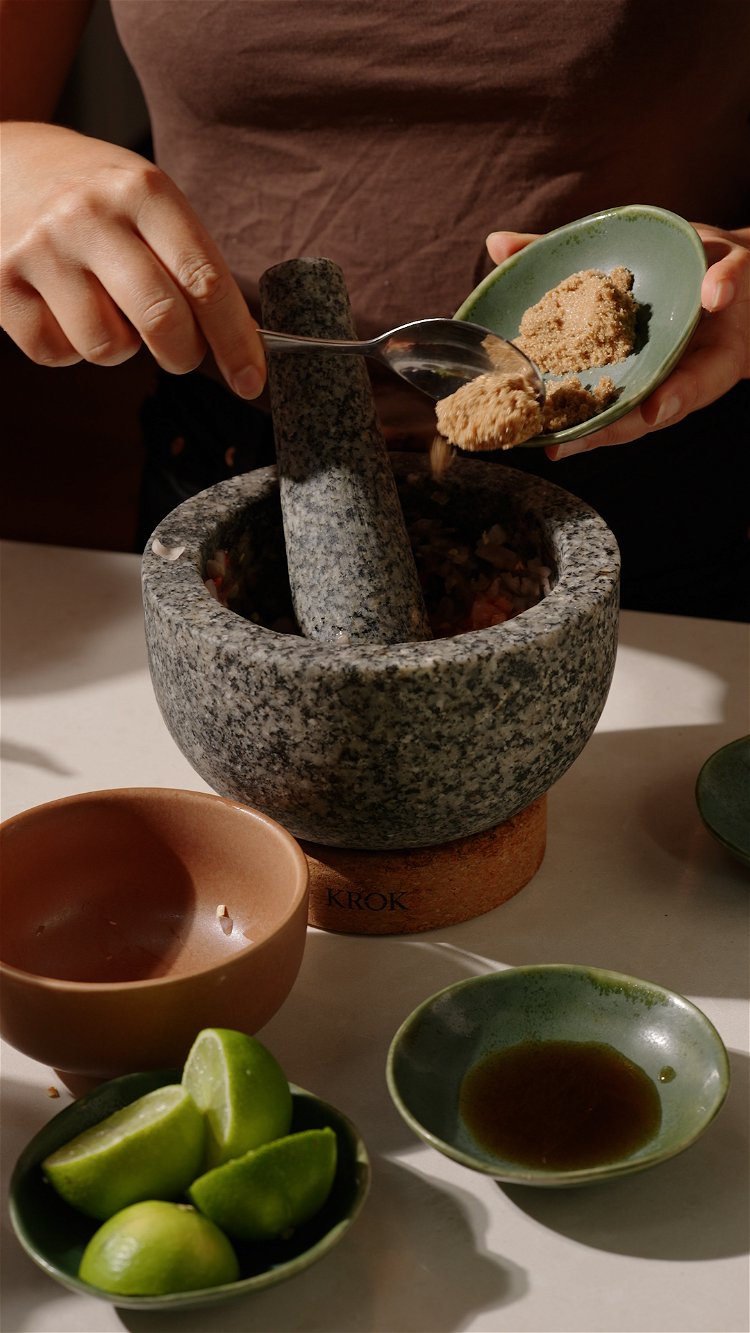
Add the brown sugar and fish sauce, lime juice, and oil, and continue to crush and mix until it comes together.
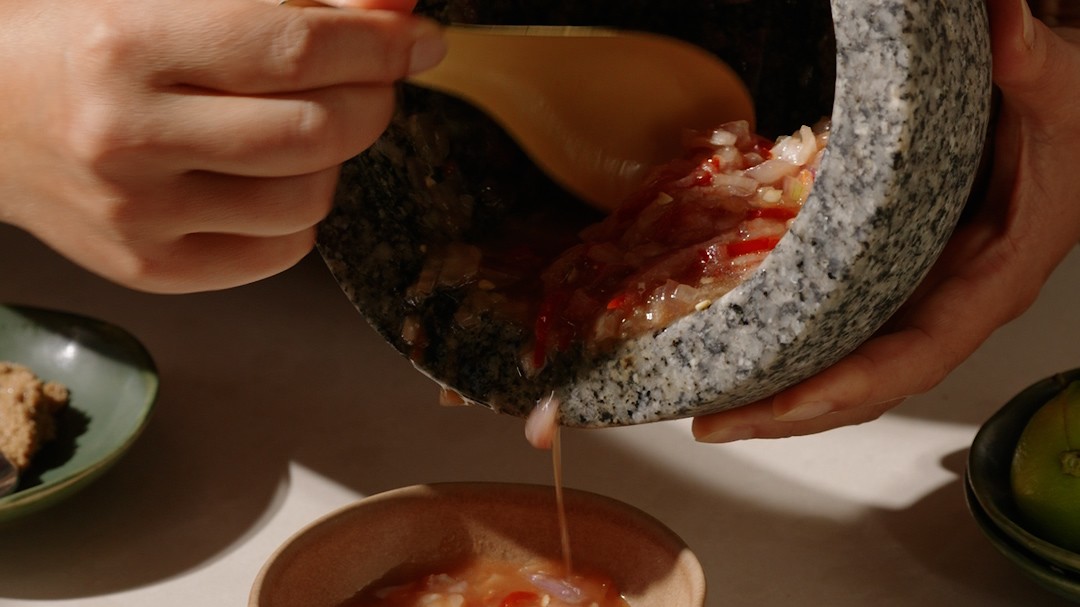
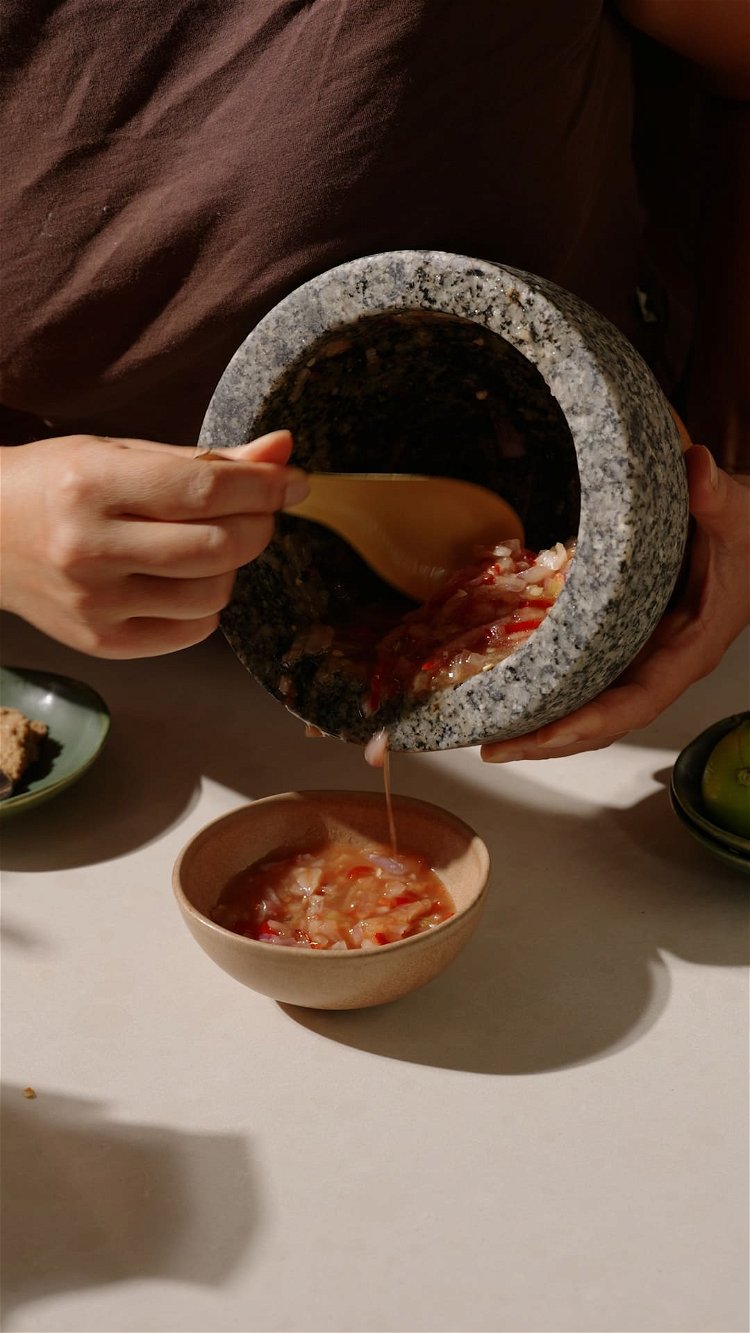
Allow the sambal to sit in the mortar for 30 minutes to settle before serving. Taste and adjust the seasoning to your liking.
Recipe Video
Recipe Note
You can really get creative with sambal and it is ok to substitute ingredients for what you have available. You can use green chilies or bird's-eye chilies. You can add ginger and garlic. Palm sugar is a great option for sweetness and you can make it as spicy or mild as you like. Try removing the seeds from the chilies or simply not using too much if you prefer less intense heat.
Frequently Asked Questions
Can you make sambal in a food processor?
You can, but you will lose the defining texture. A food processor blitzes sambal into a uniform, almost liquid purée, whereas authentic sambal has a rustic, slightly chunky consistency where you can still detect bits of chili and shallot. The mortar and pestle lets you bruise and crush just enough to release essential oils while preserving that desirable rough texture. It also prevents over-processing that turns fresh chilies bitter from heat and aeration.
Is the KROK mortar too big for a small-batch sambal?
Not at all. While this recipe is a small condiment portion, the KROK's 3-cup bowl is actually ideal because sambal requires mixing space; you need room to swirl oil, lime juice, and fish sauce into the crushed aromatics without spilling. A cramped, small mortar forces ingredients up the sides where they escape the pestle's pressure zone. The KROK gives you the surface area to integrate everything evenly, and its weight keeps the bowl stable while you work.
How long does fresh sambal last and can you freeze it?
Fresh mortar-made sambal lasts up to 5 days refrigerated in an airtight container. Because the mortar method bruises the chilies and shallots rather than slicing them, it releases more natural oils that act as a light preservative, helping the sambal stay vibrant for the full 5 days. Freezing is not recommended for fresh sambal because the raw shallots and chilies lose their crisp, punchy texture when thawed. If you want a longer-lasting version, fry the finished sambal in oil before storing, which extends shelf life to 2–3 weeks refrigerated.









Leave a comment