This recipe is a typical Piedmontese sauce that was created to give flavor to food that isn’t tasty enough on its own, such as boiled meat (or leftovers) and vegetables. The sauce is super tasty because it’s made with garlic, anchovies, and the star of the sauce: parsley. Many also use boiled egg yolks or old bread soaked in vinegar in this sauce but I would rather use a boiled potato as the starch for this dish.
Hi, my name is Alessandra Lauria, I am a Sicilian pasta maker expert, a dinner party host, and creator and founder of The Pasta Studio - an online (and offline) pasta school. As my roots are Sicilian, I tend to share what’s locally delicious to me. Hope you will enjoy it as much as I do!
I discovered this sauce during the 2020 lockdowns when exploring regional Italian traditions for social media content. You might think, “how did you not know!?” Well, for more than 14 years, I lived abroad and the Italian cuisine that was familiar to me was Sicilian from when I was younger. But during the pandemic, when we all had to come up with different videos and recipes for social media content, I started to investigate more Italian traditions that I wasn’t familiar with and came across Salsa Verde. Ever since, you can usually find a side of salsa verde on my tables and between many of my dishes just because of how simple, cheap (coming from the Cucina Povera cuisine), and delicious it is.
Traditionally, this recipe was made in a mortar and pestle and this is still the best way to create a creamy and delicious sauce.
Why in the KROK
Salsa verde is built in layers, not blended all at once. You need a smooth anchovy-caper-garlic base, then a creamy potato middle, then bruised parsley folded in at the end. A food processor dumps everything together into a uniform, gray-green sludge. The KROK's unpolished Thai granite interior grips slippery anchovies and capers so they don't slide around while you grind them into paste, and the heavy pestle mashes the boiled potato into the emulsion without turning it gluey. The 3-cup bowl gives you the room to work in stages, which is the only way to get the traditional layered texture where you taste each ingredient. Because granite stays cool, the parsley stays bright and doesn't oxidize into a dull, bitter mess.
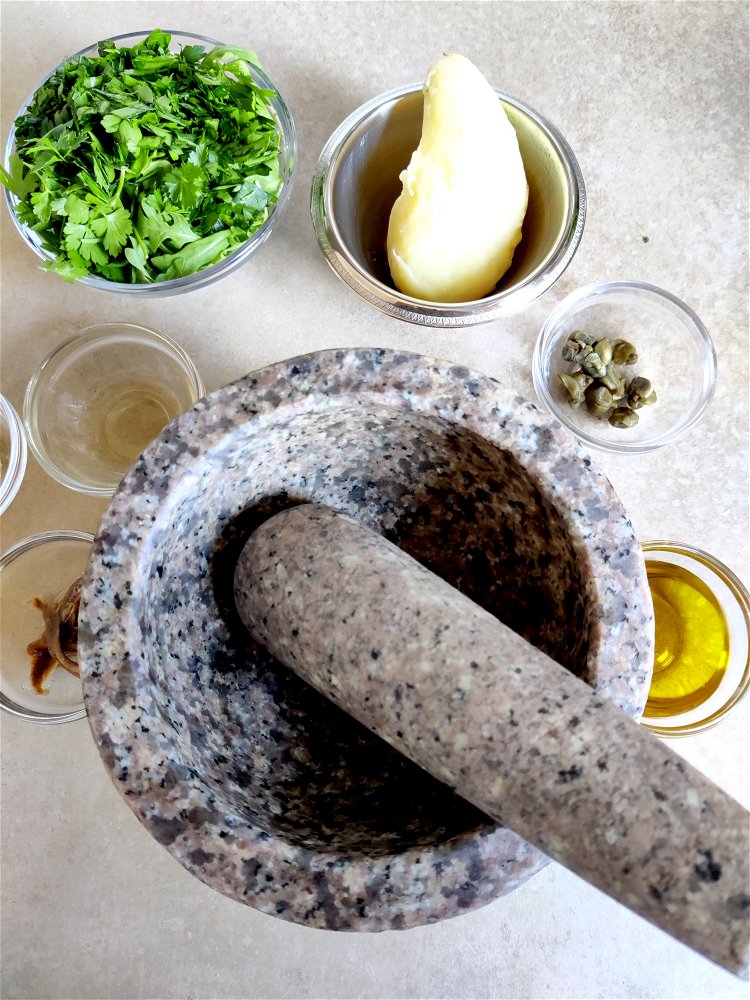
You need to do a few things to prepare your ingredients. First, boil the potato with unsalted water, leaving the skin on. Then, chop your parsley a bit, especially if it has big leaves and is hard. And finally, desalt your capers by running under cold water and then letting them soak for a bit.
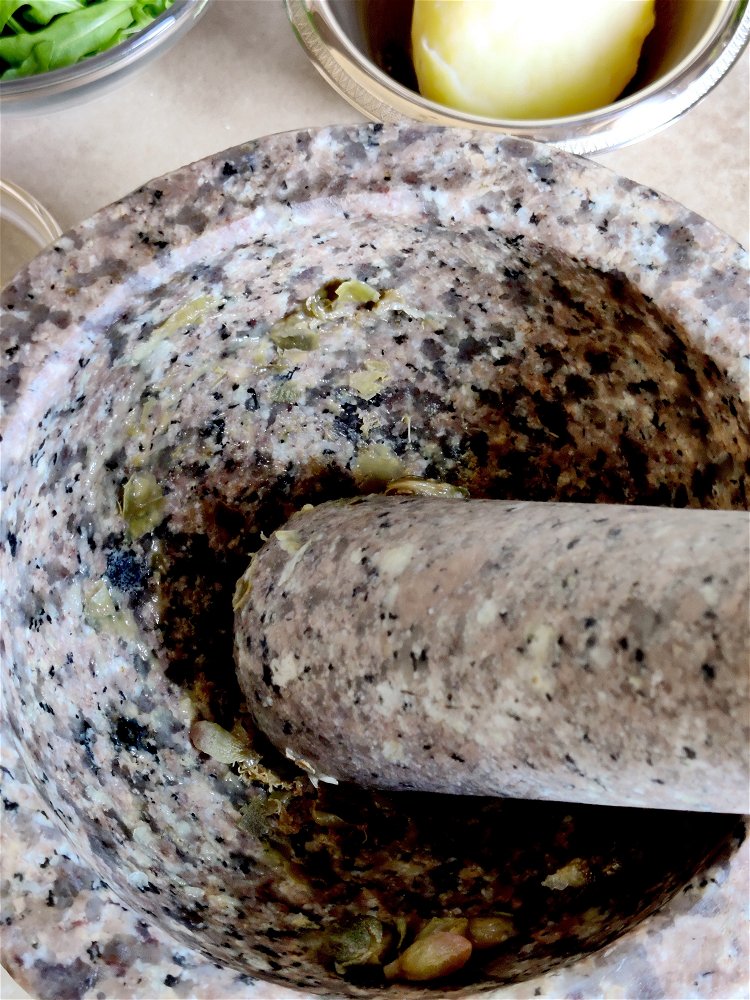
Once your preparations are complete and the ingredients are ready, start adding ingredients into the mortar to pound and grind. Begin with the garlic, capers, and anchovies until you have a smooth paste.
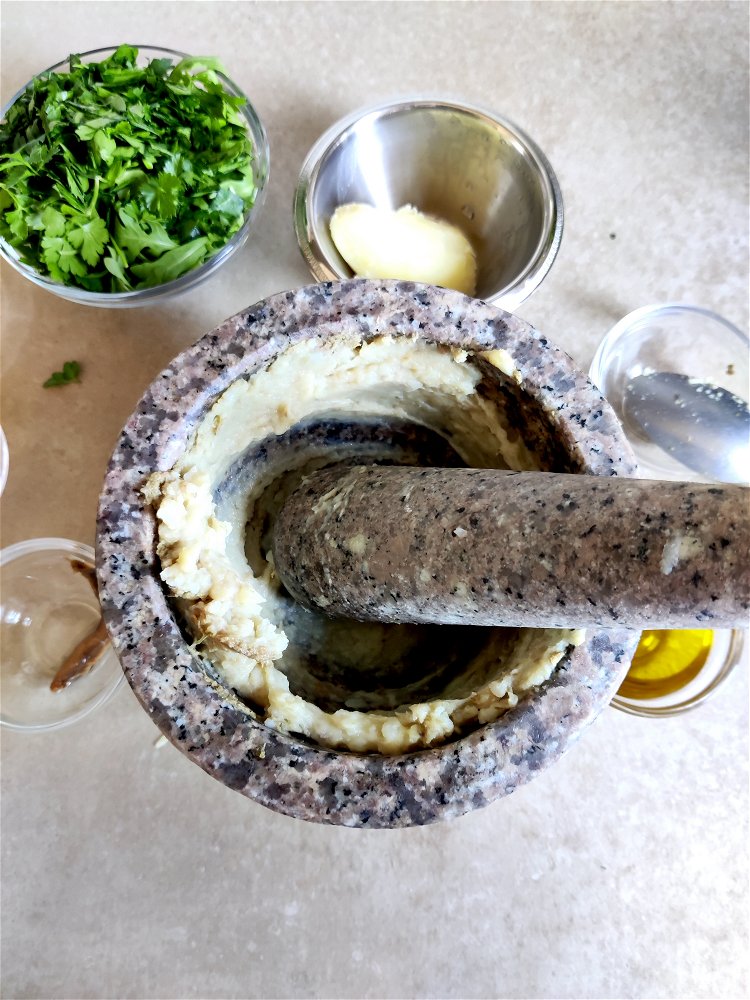
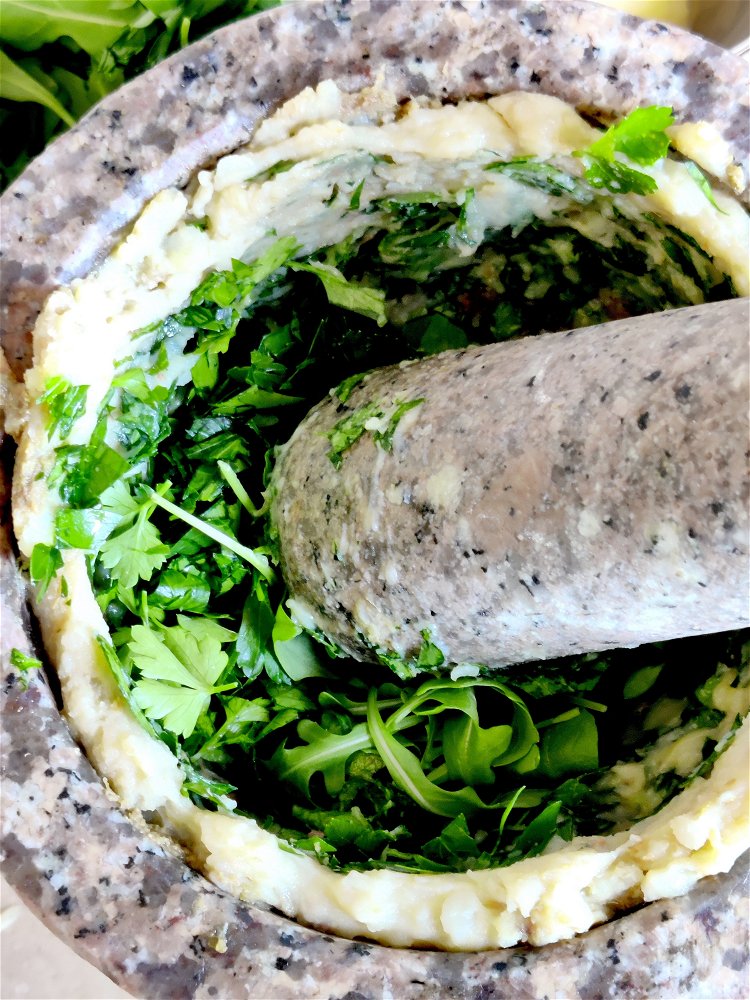
Next, add in the potato, mash it down a bit then swirl the pestle until your paste and potato is fully incorporated.
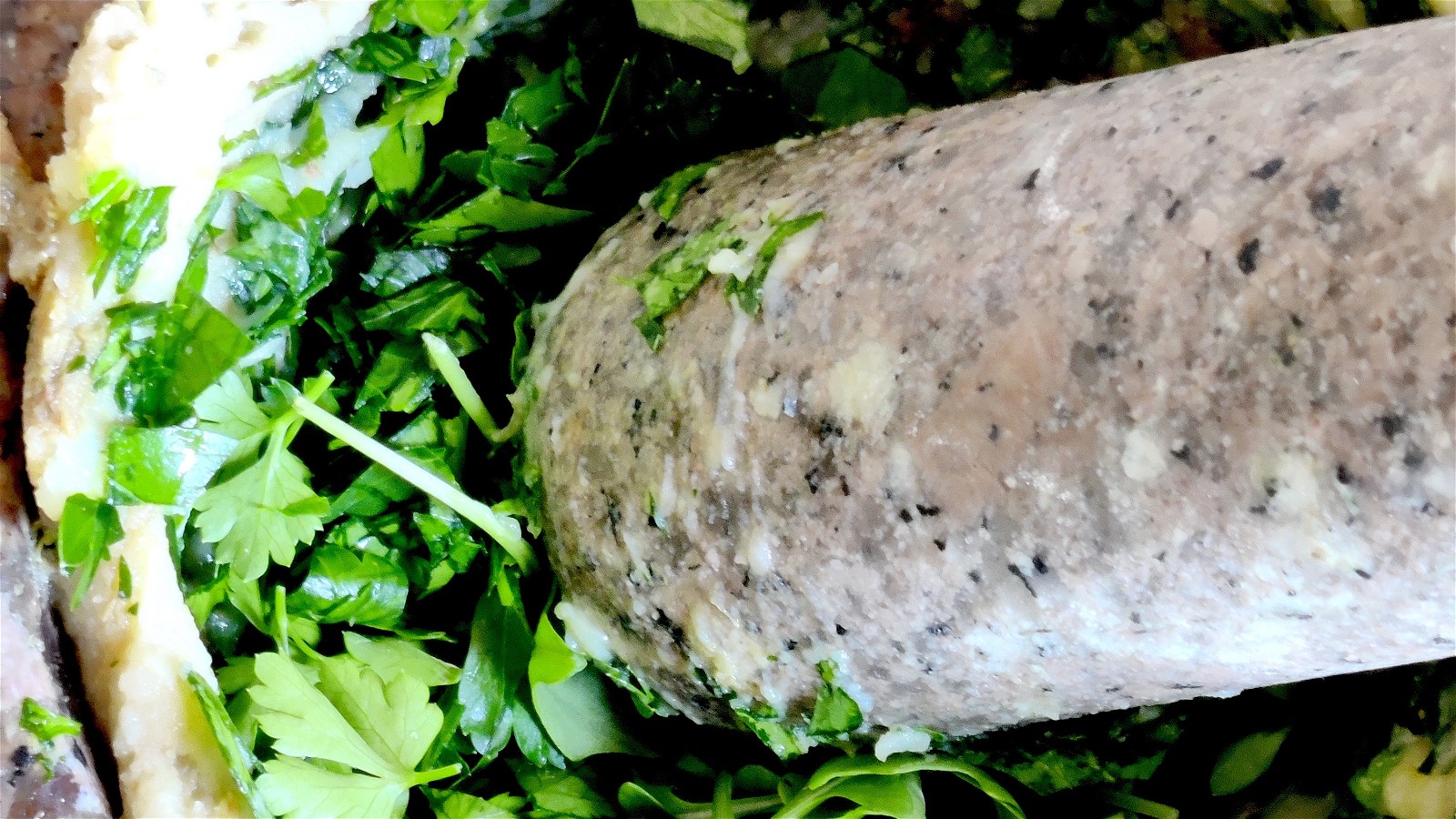
The last solid ingredient is your parsley. Adding it at this stage leaves it a bit chunky but smash and grind to your desired texture, mixing it will with the previous ingredients.
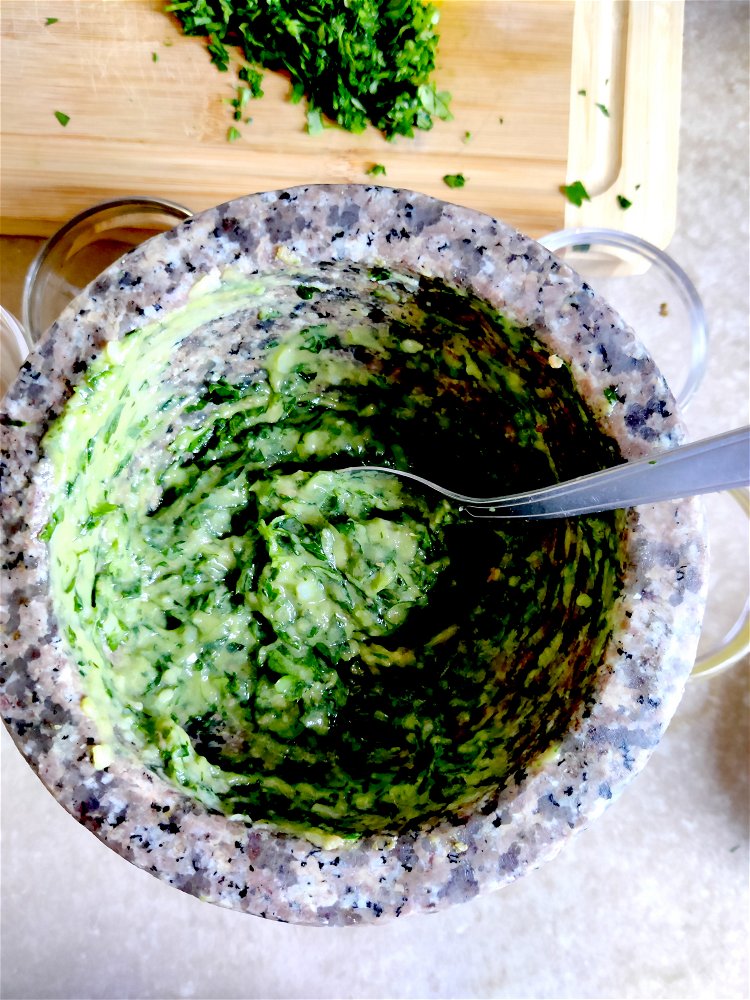
After all solid ingredients are ground down, add the vinegar and olive oil while swirling the pestle.
Recipe Note
This is an incredibly versatile sauce. Add it to anything you want, from vegetables to meat, salads to pasta dishes.
Similar to pesto, you can store the sauce with plenty of Extra Virgin Olive Oil on top, refrigerating it for 3-4 days. If you want, you can also freeze the sauce, just as you can with a pesto.
Frequently Asked Questions
Can you make salsa verde in a food processor?
You can, but it will be a completely different sauce. A food processor blends all ingredients simultaneously into a uniform, watery purée where the potato turns gluey and the parsley bruises into brown shreds. The mortar and pestle method builds the sauce in distinct stages: first, a smooth anchovy-caper-garlic paste, then a creamy potato base, then roughly bruised parsley folded in at the end. This layering preserves individual textures and prevents the potato starch from over-activating, which is what makes processor versions gummy.
Why does my salsa verde turn out gluey or watery?
Glueiness comes from over-processing the potato. When a food processor or blender whips boiled potato at high speed, the starch granules burst and turn the mixture into a paste. In a mortar, the potato is gently mashed and folded into the existing anchovy-caper paste, incorporating without overworking the starch. Wateriness usually means too much vinegar or oil was added too quickly. In the mortar, you can add liquid gradually while swirling, watching the consistency change in real time.
Is the KROK mortar and pestle good for Italian sauces like salsa verde?
Yes. The KROK's dense granite and unpolished interior grip wet, slippery ingredients like anchovies, capers, and parsley leaves efficiently, preventing them from sliding around the bowl. The 3-cup capacity provides ample room to build the sauce in stages without overflow. The cool stone also keeps delicate herbs from oxidizing and turning brown during the grinding process.









Leave a comment