Entice customers to sign up for your mailing list with discounts or exclusive offers.
Lebanese Hummus Made in a Mortar and Pestle
Last updated: May 2026
Hummus is a dip that is beloved globally and has Middle Eastern origins. Commonly made with cooked chickpeas, tahini, garlic, lemon, and salt; its uses are many and varied. Hummus, in its simplest form, is the perfect accompaniment to a Middle-Eastern or Greek feast and is just as welcome on a salad sandwich. A basic hummus recipe lends itself to the imagination of the maker in that there are countless ways to enhance its flavor, texture, and presentation.
My name is Breda Fenn and I’m a recipe developer in Sydney, Australia. My introduction to hummus as a child was being served a store-bought version with stale rice crackers by my neighbors. My introduction to fresh, homemade hummus was at Raniah and Itaf’s home. They were family friends who had immigrated from Lebanon. There was no comparison between the two offerings. Itaf’s cooking was fresh, flavourful, and balanced and served with a spirit of welcome. By design, hummus is a dish of generosity; of sharing. It fosters community.
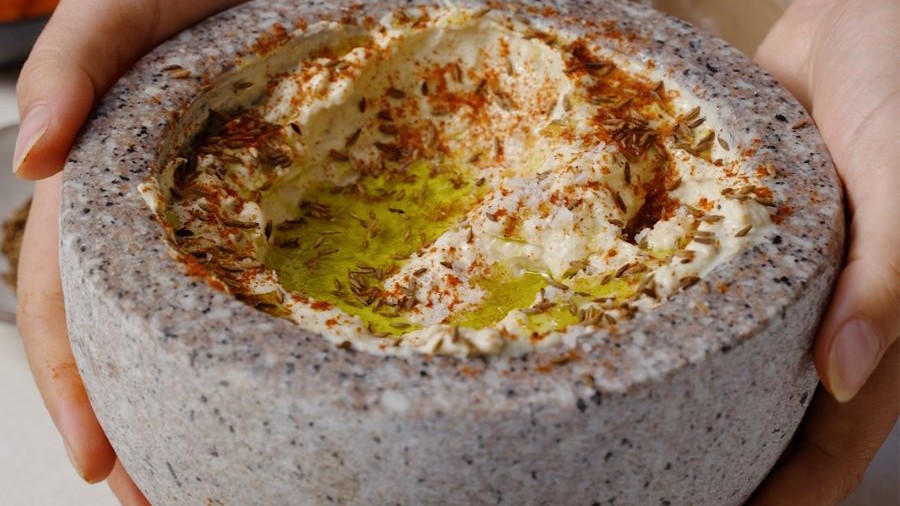
Of course, you can use a food processor or blender to make good hummus. Using a mortar and pestle allows you a greater degree of control over the flavors and textures. Seasoning as you go and balancing salt with acid to your preference. Also, serving the hummus in the mortar makes for a stunning addition to the table.
Why in the KROK
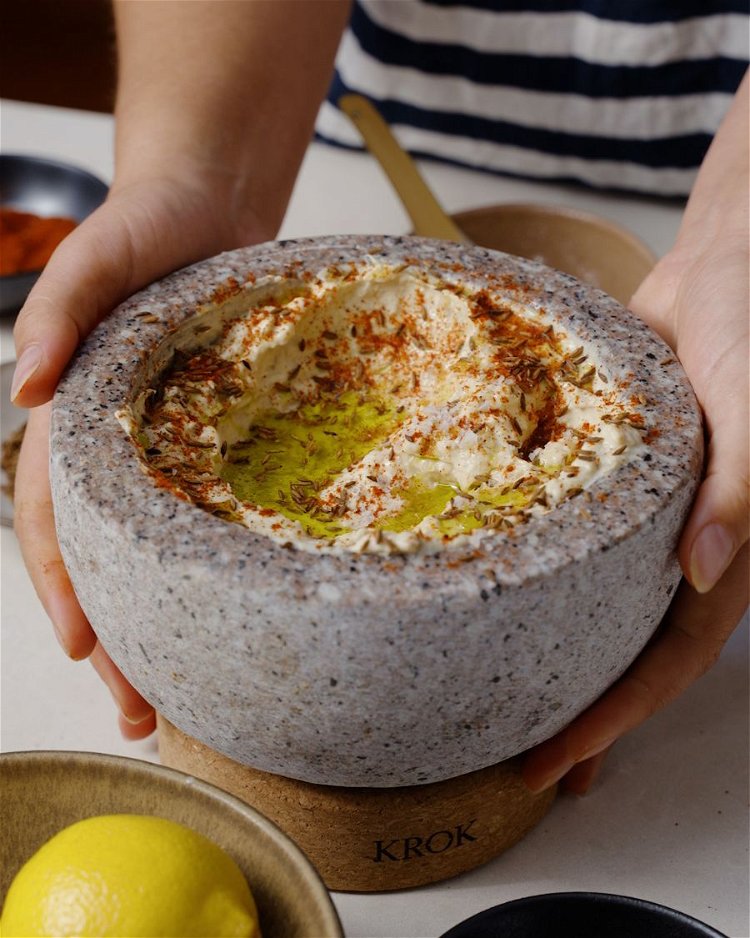
Hummus is one of the few recipes where rustic texture is the goal. A food processor whips chickpeas into a uniform, almost gluey paste, while the KROK's heavy granite pestle crushes them into a creamy yet chunky consistency that still has character. The unpolished Thai granite interior grips slippery chickpeas and tahini so they don't slide around while you work, and the 3-cup bowl gives you room to fold in lemon juice and cold water gradually, which is critical for achieving that light, airy texture. Because granite stays cool, the tahini doesn't seize up or turn bitter from heat. And since the KROK is handsome enough to double as a serving bowl, you can take it straight to the table, drizzle with garlic oil and cumin, and let guests scoop directly from the mortar.
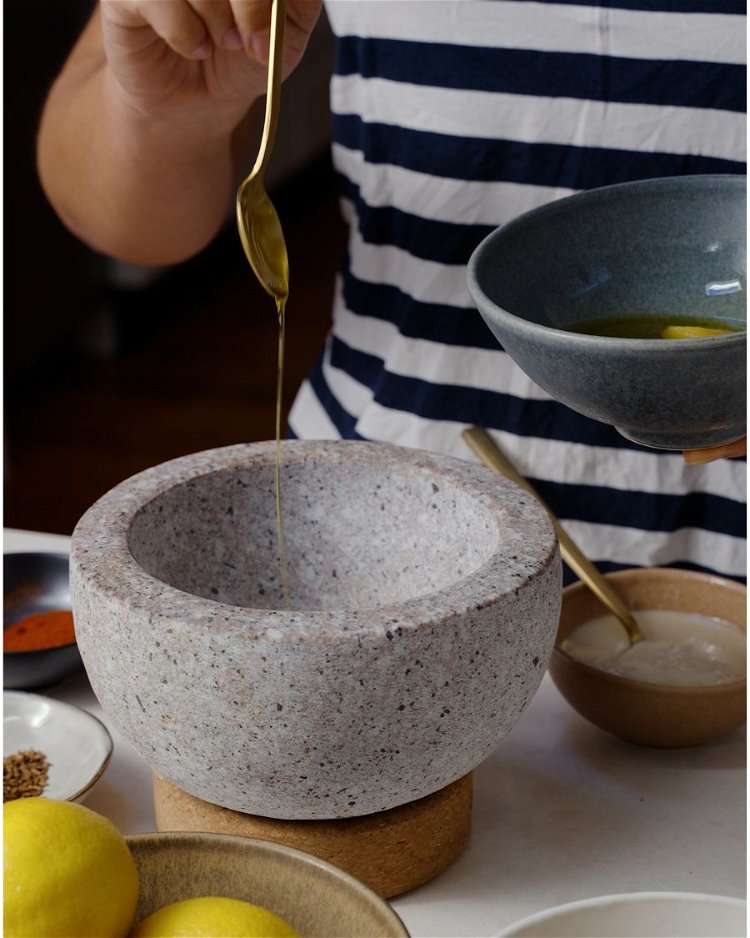
Place the olive oil and garlic cloves into a small sauce pan and gently heat. Cook on very low heat until the garlic is very soft. This should take around 30 minutes. Pour into a clean container and allow to cool.
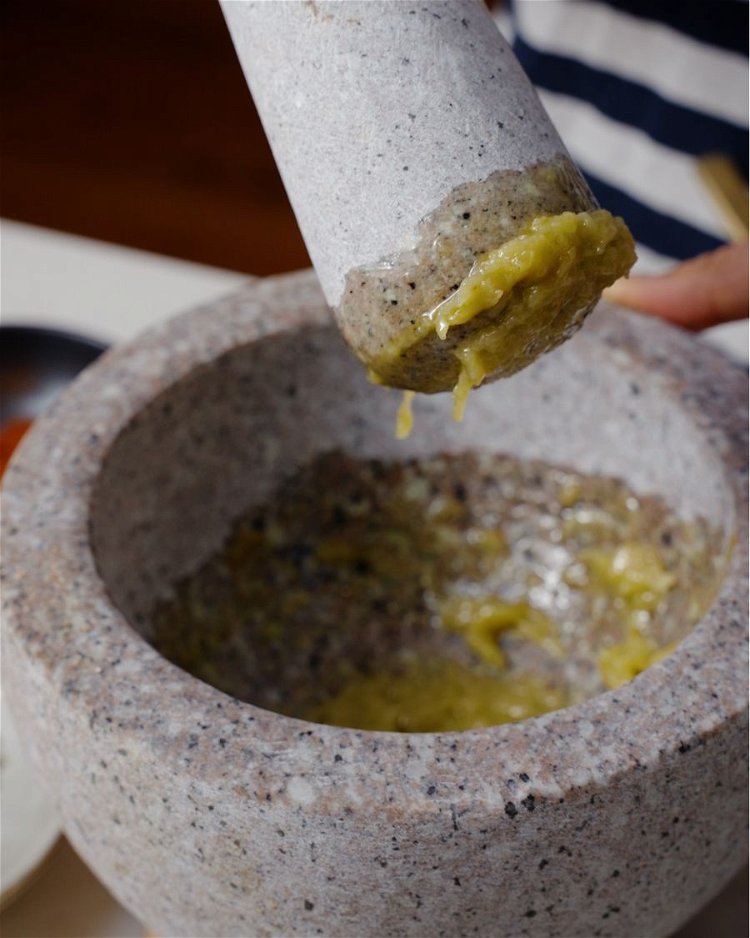
Place 3 confit garlic cloves into the mortar with a little of the garlic oil. Save the remaining confit garlic and oil to use another time. Add a pinch of sea salt. Using the pestle, crush the garlic to form a smooth paste.
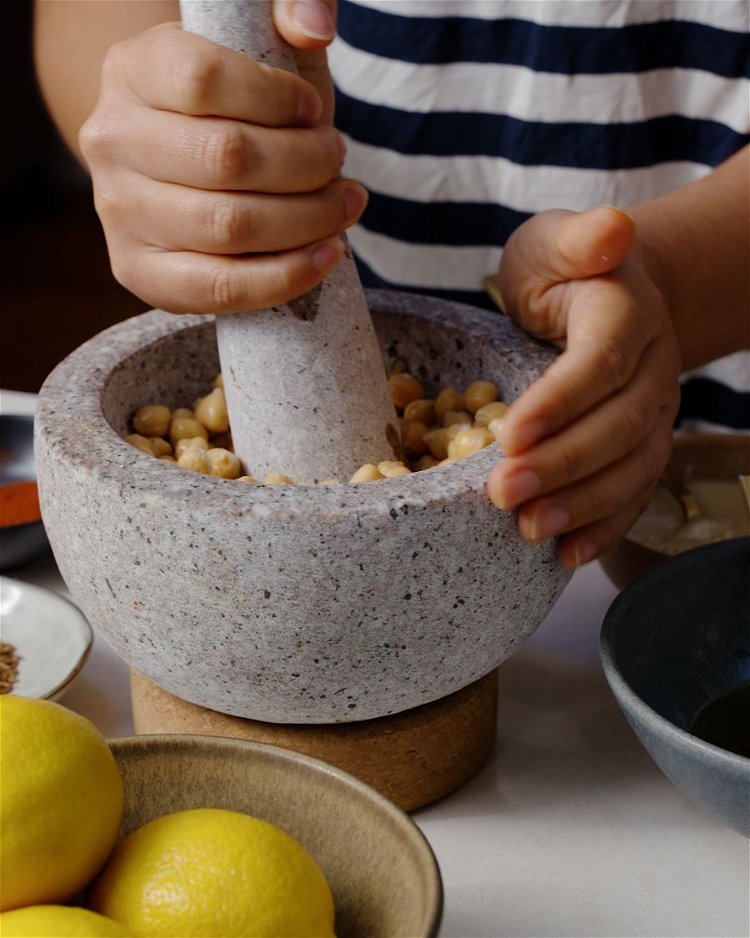
Add the cooked chickpeas with another small pinch of salt and crush into a rough paste. Add the tahini and continue to crush to combine.
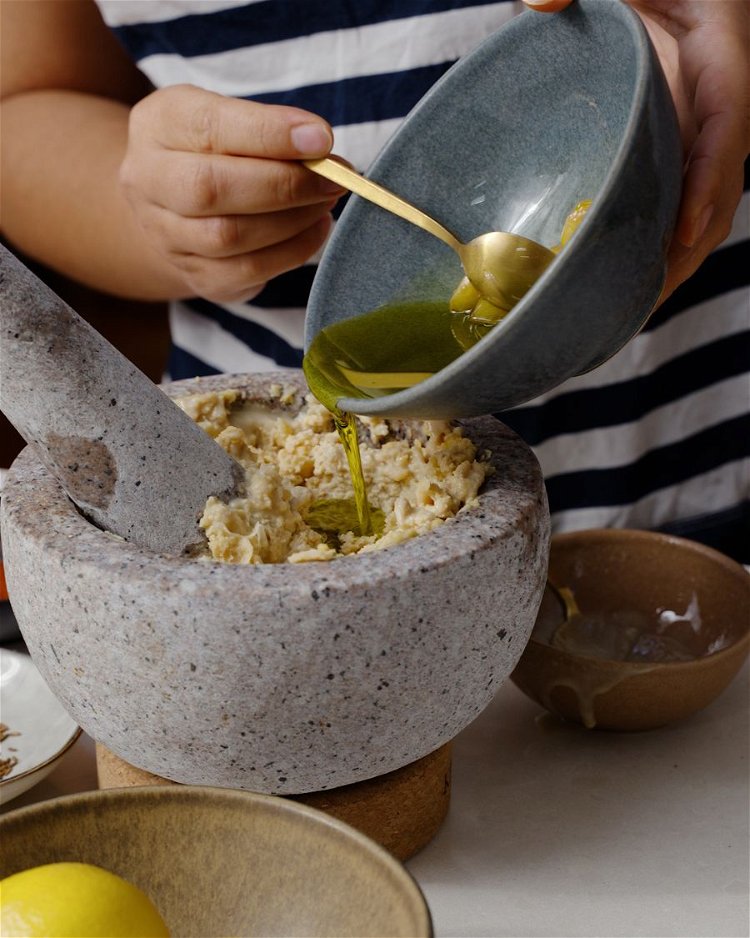
Add the juice of half a lemon and 2 tablespoons of garlic oil. Mix together.
Loosen the mix by adding cold water a little at a time until you form your desired texture. Taste and adjust the seasoning to your liking. You may like to add more lemon, tahini, or salt.
Garnish the top with toasted cumin seeds, chili powder, and a little more garlic oil.
Recipe Video
Recipe Note
There are many ways to make hummus your own. Consider adding spices to the mix or garnishing with fresh herbs. The sky's the limit!
Serve as a dip with Lebanese bread or as a side to a bigger meal. Hummus is the perfect accompaniment to roasted meats, salads, and flatbreads.
To store hummus, place it in a clean, airtight container and refrigerate. It should last for 3 to 4 days.
To store the confit garlic, refrigerate it in a clean, dry, airtight container. It should last up to 2 weeks.
Frequently Asked Questions
Can you make hummus in a mortar and pestle instead of a food processor?
Yes. A food processor blends chickpeas into a completely smooth, dense purée. A mortar and pestle crushes them into a rustic, creamy paste with more texture and body, which is closer to traditional Lebanese hummus. The stone-on-stone action also releases more flavor from the garlic and toasted cumin, and the manual process lets you control exactly how much water and lemon to add for your preferred consistency.
Why does my hummus taste gritty or lumpy?
Grittiness means the chickpeas weren't crushed thoroughly enough before adding liquid. In a mortar, start by crushing the garlic into a paste, then add chickpeas and smash them against the stone until they break down into a rough mash before adding tahini or lemon juice. Adding liquid too early creates a barrier that prevents the chickpeas from breaking down fully. The KROK's heavy pestle and unpolished interior generate the friction needed to break down chickpea skins efficiently.
Is the KROK mortar and pestle good for making hummus?
Yes. The 3-cup capacity easily holds 200g of chickpeas plus tahini, lemon, and water without overflow. The dense granite crushes chickpeas into a creamy, textured paste rather than the uniform slurry a processor creates, and the cool stone prevents the tahini from overheating and turning bitter. The bowl is also food-safe and attractive enough to serve directly from, which is traditional in Lebanese hospitality.








Leave a comment