Pistachio and Basil Pesto Made in a Mortar and Pestle
Last updated: May 2026
It’s hard to consider yourself Sicilian without adding pistachio to your food regularly. And that’s exactly why the Pistachio Pesto was born! Simple, delicious, and versatile, you literally cannot go wrong with it.
Hi, my name is Alessandra Lauria, I am a Sicilian pasta maker expert, a dinner party host, and creator and founder of The Pasta Studio - an online (and offline) pasta school. As my roots are Sicilian, I tend to share what’s locally delicious to me. Hope you will enjoy it as much as I do!
Recently, I was contracted as a consultant for a restaurant in Lisbon and they asked me if I could develop a pistachio recipe for them. So I did. Since then, I’ve redone and revised the recipe many different ways, finally landing on this version that’s completely plant-based.
As usual, using the mortar and pestle for any pesto creates the best results with the strongest flavors and aromas. My new motto: Everything tastes better with KROK!
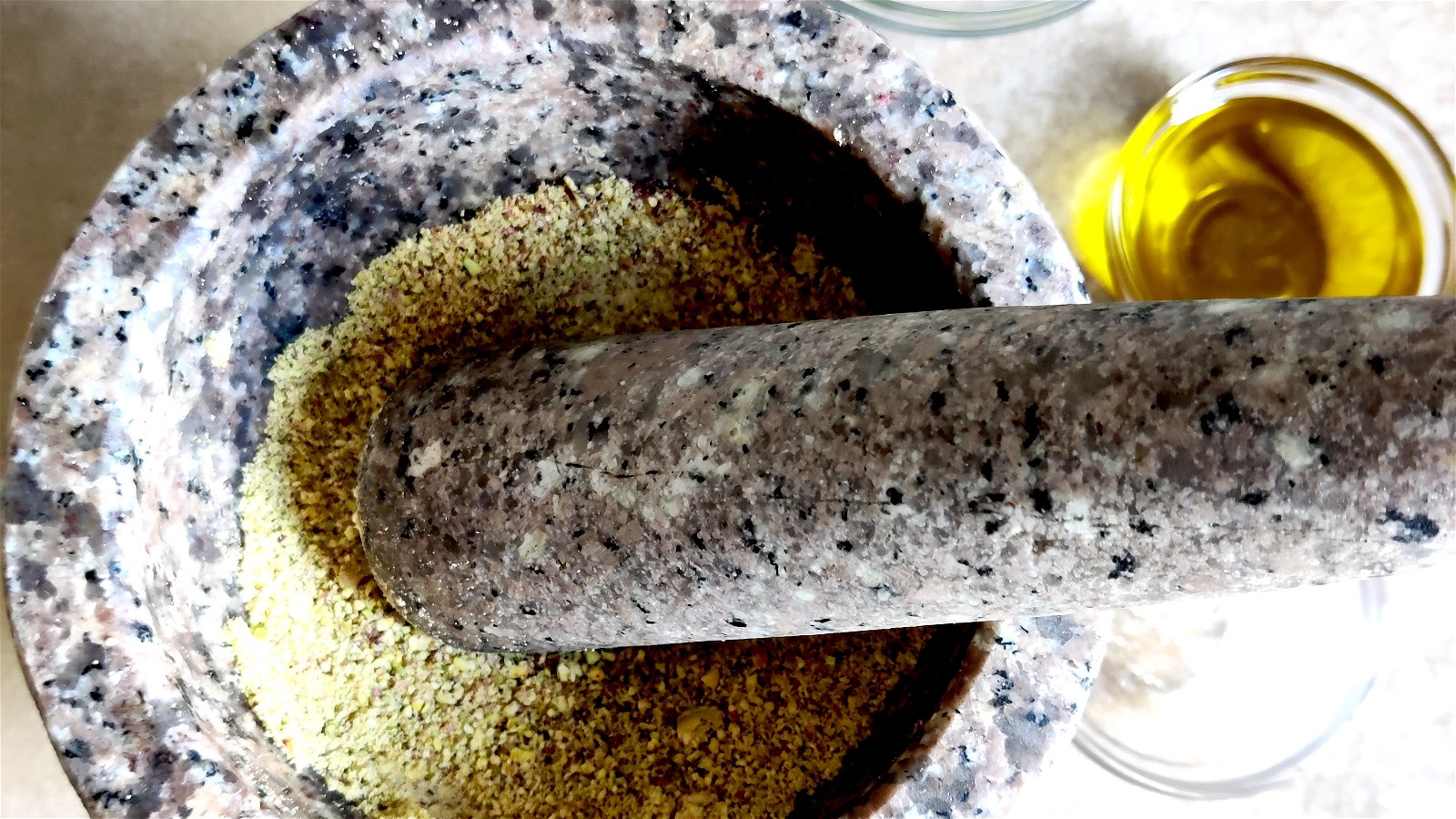
To make things a bit easier, I would suggest chopping your pistachios a bit before starting and adding them to your mortar a little at a time.
Why in the KROK
Pistachios are oily, dense nuts that a food processor turns into dry, sandy dust rather than a creamy paste. The KROK's unpolished granite interior grips the oily nut pieces so they don't slide around while you crush them, forcing the pestle to break down cell walls and release their natural fats. That oil is what emulsifies the pesto. Without it, you're just mixing green crumbs with olive oil. The heavy pestle also bruises basil gently rather than shredding it, preserving the bright color and peppery aroma that turns brown and flat in a warm processor. The 3-cup bowl gives you the room to fold in breadcrumbs and extra oil at the end without overflow, letting you control exactly how creamy or rustic the final texture becomes.
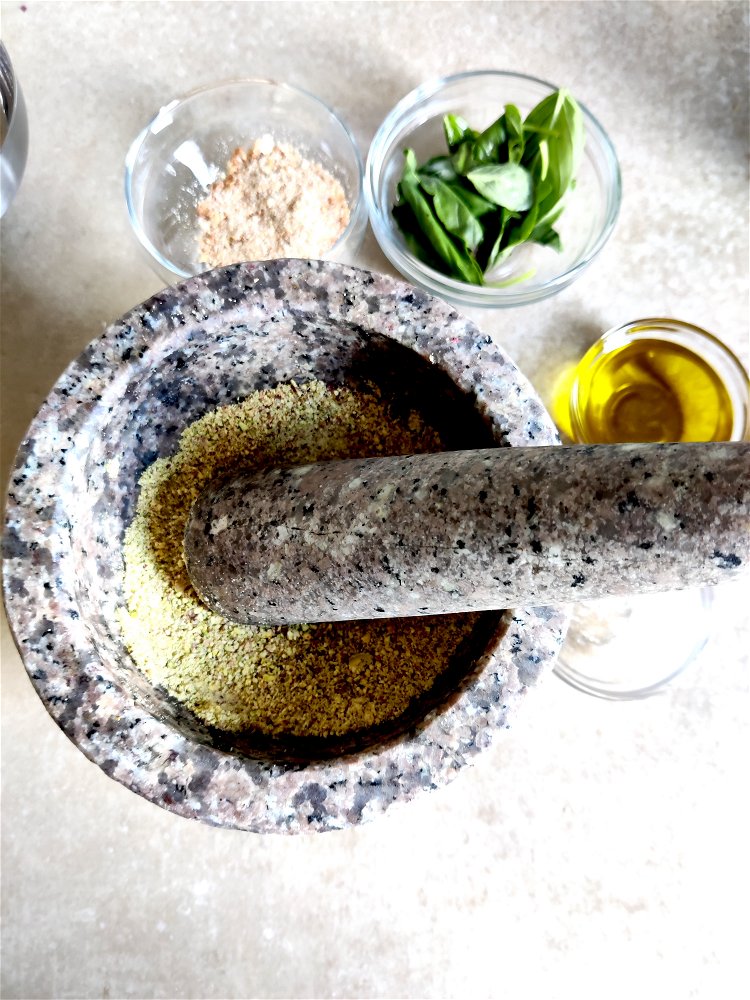
Toast the pistachios, chop them up a bit, and then prepare the rest of your mise en place.
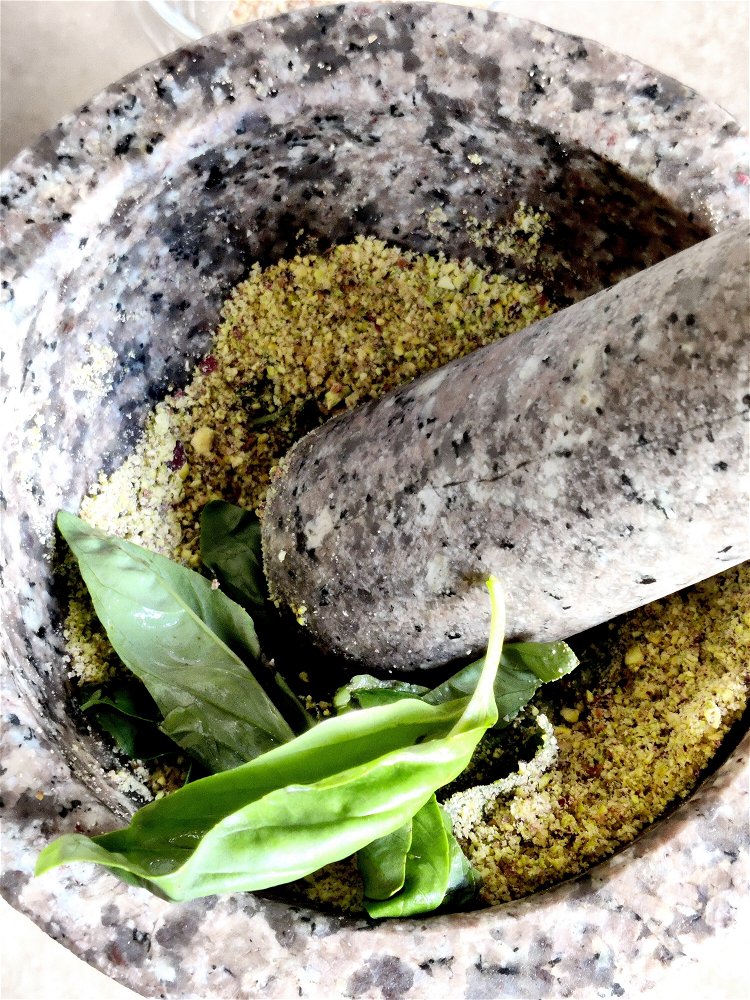
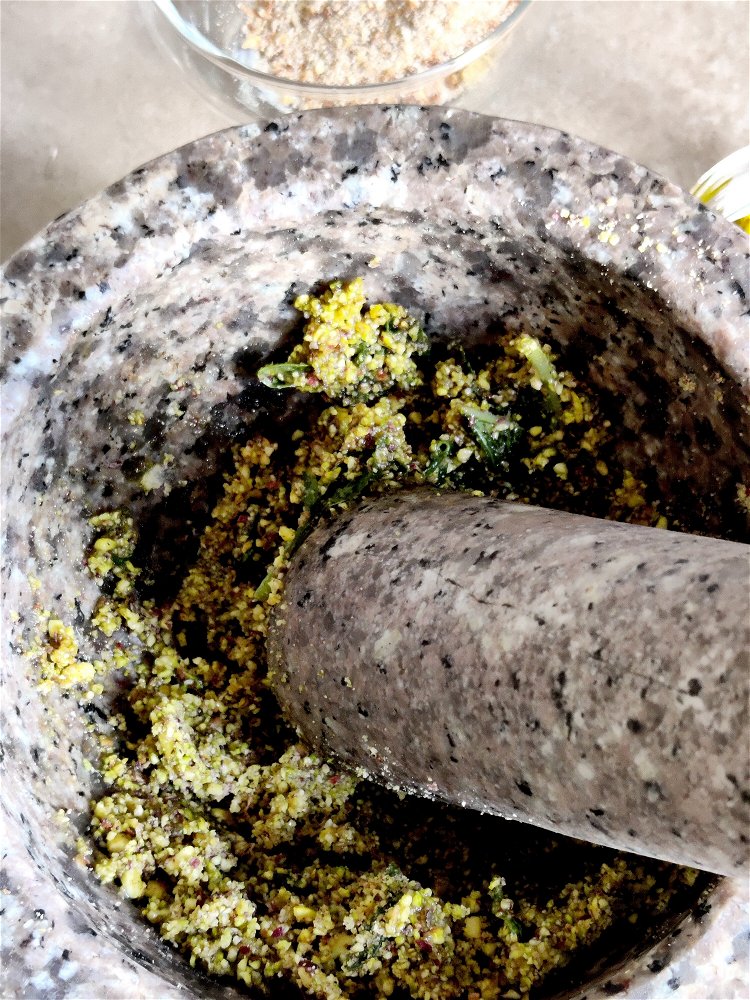
Add your ingredients into the mortar and begin crushing and pounding. For best results, follow this order: basil, pistachio, olive oil, and finally breadcrumbs.
Add extra olive oil, if needed, before serving.
Enjoy!
Recipe Note
The more olive oil you use, the creamier it will be. You can always add more right before adding it to your pasta sauce.
Uses:
Honestly, you can just eat it as is because this pesto is delicious! However, I would definitely recommend having it with spaghetti and confit tomatoes or as a seafood sauce. Also, you can just enjoy it on bread, salads, and even pizza.
The pesto can be stored in a glass jar in the fridge for 3-4 days. Just make sure there is plenty of Extra Virgin Olive Oil on top of the pesto when storing.
Frequently Asked Questions
Can you make pistachio pesto in a food processor?
You can, but the texture and flavor will suffer. Food processor blades chop pistachios into a dry, mealy dust rather than crushing them into an oily paste. The friction heat also browns and wilts the basil, dulling its aroma. A mortar and pestle crushes the nuts against the stone, releasing their natural oils which then emulsify with the olive oil into a cohesive, creamy sauce. The basil is bruised, not shredded, staying bright and fragrant.
Why does my pistachio pesto taste dry or gritty?
Dryness comes from under-crushing the pistachios. When pistachios are chopped rather than crushed, their cell walls remain intact and the natural oils stay trapped inside the nut pieces. The mortar and pestle's stone-on-stone action ruptures those cells and draws the oils out, creating a self-lubricating paste. Grittiness usually means the breadcrumbs were added too early or over-worked. Add them last, after the pistachios and basil have formed an oily base, so they absorb excess oil rather than turning into sandy clumps.
Is the KROK mortar and pestle good for nut-based pestos like pistachio?
Yes. The KROK's dense granite generates the focused force needed to crush hard, oily nuts like pistachios, almonds, and walnuts into a paste rather than a powder. The unpolished interior grips the nut pieces so they don't slide around under the pestle, and the 3-cup bowl accommodates the full batch plus room to swirl in oil and fold in breadcrumbs. The cool stone also keeps delicate basil from oxidizing during the grinding process.










Thanks for sharing this technique. I have never used breadcrumbs before! Also, love your mortar and pestle – could you share where you found it?
Leave a comment