Fresh Rocket and Walnut Pesto Made in a Mortar and Pestle
Last updated: May 2026
This delicious pesto is best for the early summer season since it uses rocket (also known as arugula), a very nutritious leafy green. The rocket is delicate, spicy, and tasty, and when combined with garlic and walnuts, you end up with a very mouth-watering pesto.
Hi, my name is Alessandra Lauria, I am a Sicilian pasta maker expert, a dinner party host, and creator and founder of The Pasta Studio - an online (and offline) pasta school. As my roots are Sicilian, I tend to share what’s locally delicious to me. Hope you will enjoy it as much as I do!
As with all pestos, using the mortar for this Rocket Pesto enhances the flavors from the fresh ingredients while making sure all the nutritional values are not lost.
This recipe calls for two kinds of cheese: Grana and Pecorino. If you don’t have the two different kinds of cheese, you can just use Grana Padano cheese which is similar to Parmesan. If you are using only Pecorino cheese, make sure it’s aged and it is less in quantity as it is saltier than the Grana cheese.
Why in the KROK
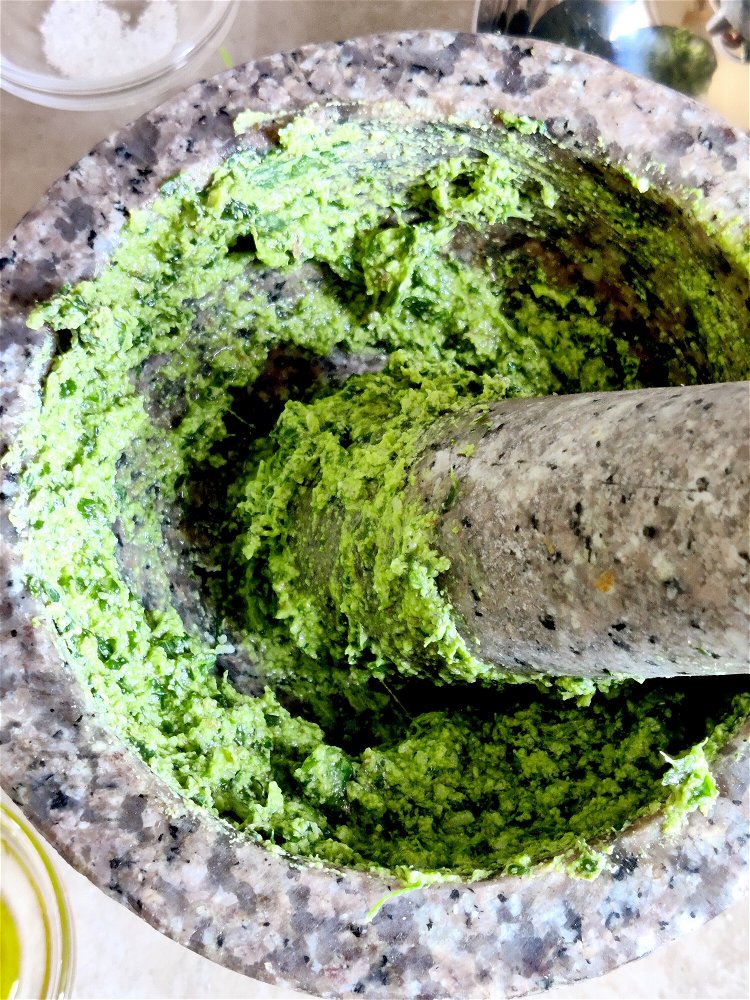
Rocket is a fragile leaf that turns bitter and brown the moment it is overworked. A food processor shreds it into an oxidized, grassy slurry within seconds, destroying the peppery bite that makes this pesto distinctive. The KROK's cool granite and heavy pestle bruise the rocket just enough to release its oils while preserving the leaf structure and bright color. Walnuts are softer than pine nuts but still require focused crushing to extract their earthy oils. The unpolished Thai granite interior grips them instead of letting them move around, and the 3-cup bowl gives you the surface area to swirl in Grana and Pecorino without overflow. Because the mortar keeps everything cool, you can make this pesto ahead of a summer lunch and it will still taste bright and peppery rather than flat and brown.
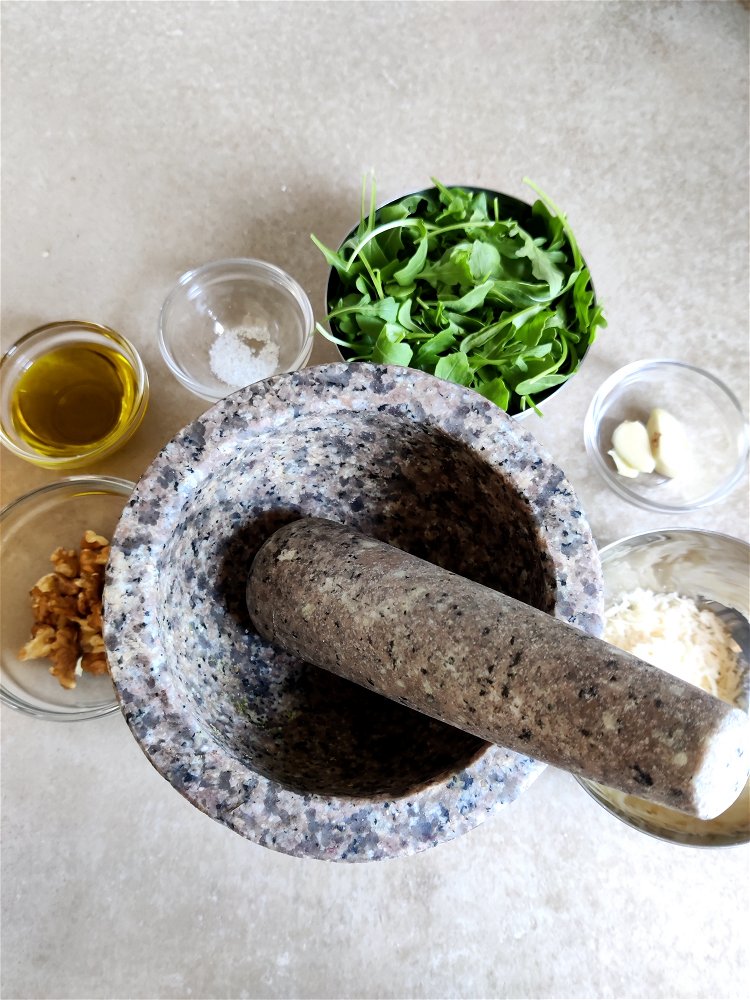
Prepare your mise en place by grating the cheese and setting aside all ingredients.
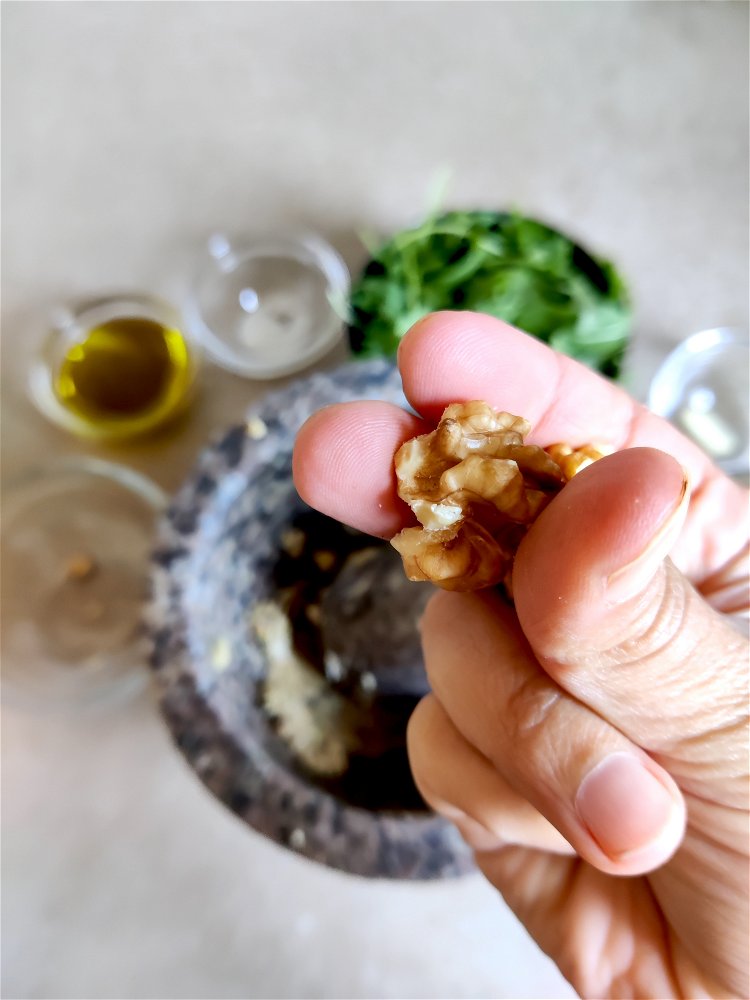
Add the garlic into the mortar and smash it until it’s completely dissolved into a paste. Then add the walnuts to grind down as well. If the walnuts are difficult to break down, you can add a bit of olive oil during that step.
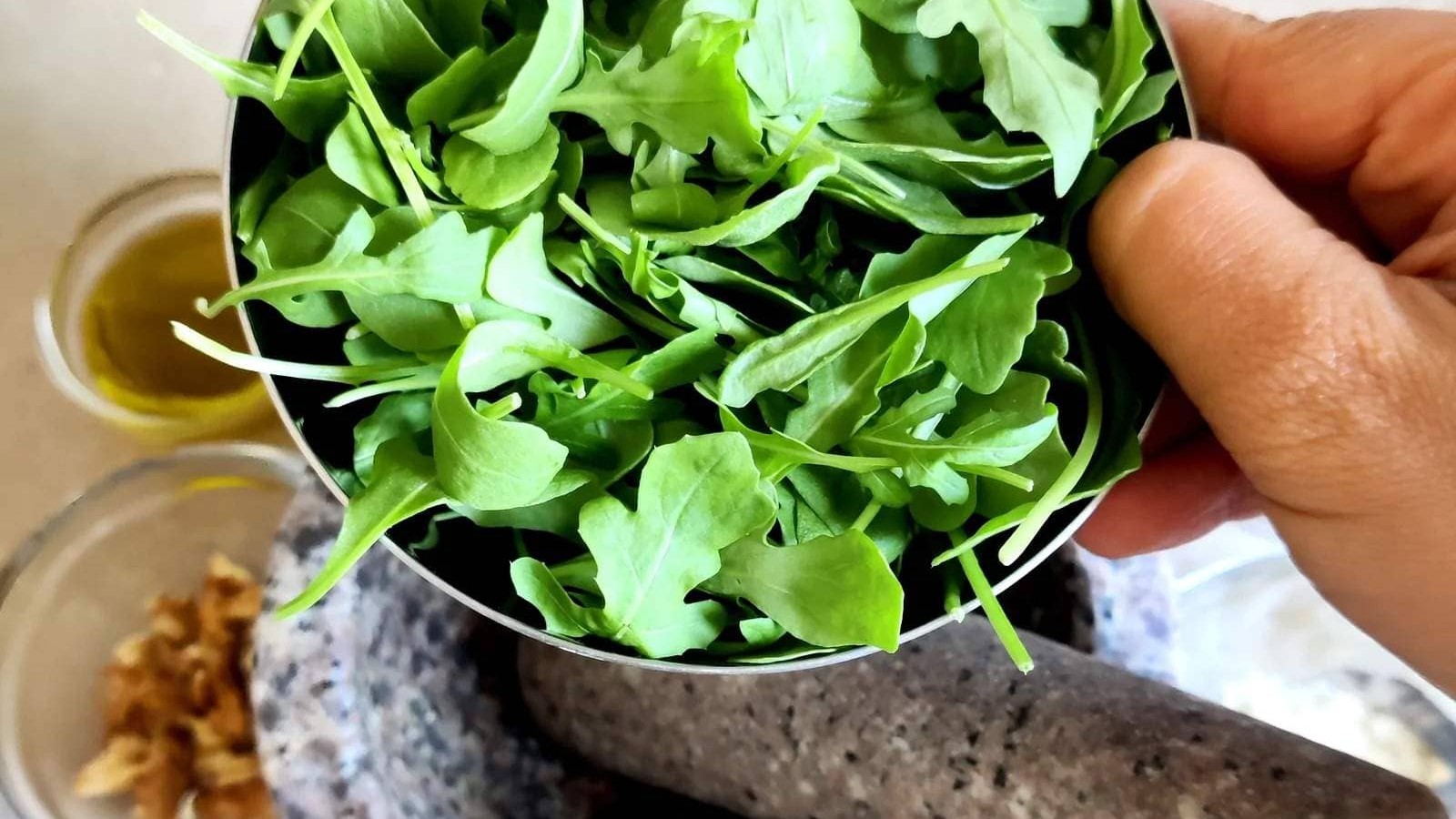
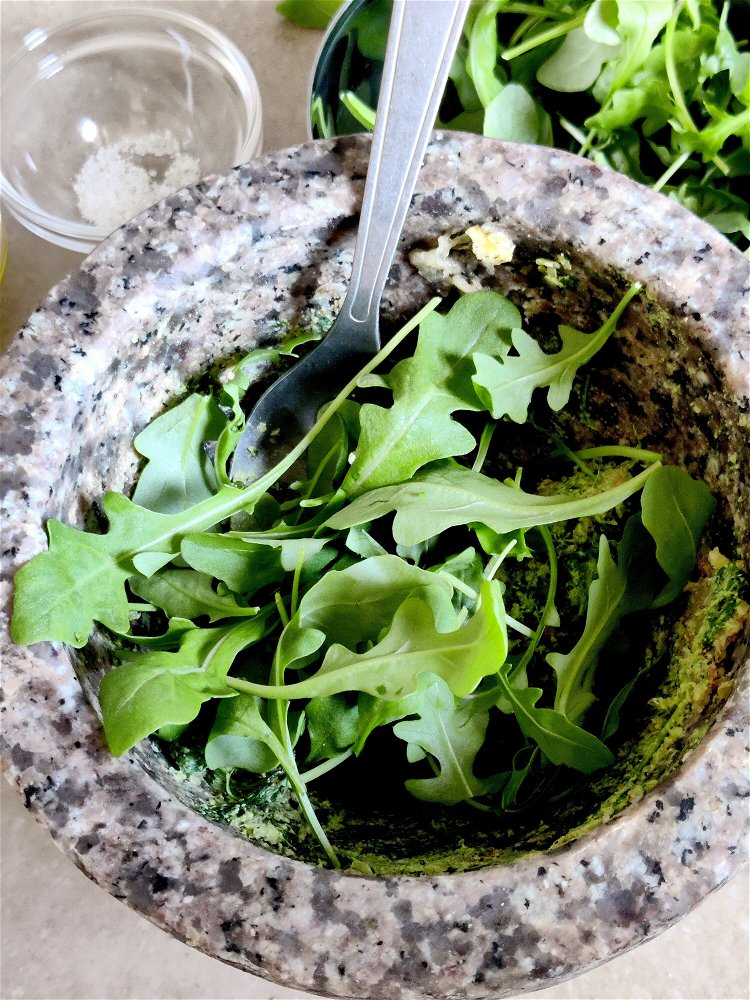
Add the rest of your ingredients, in this order: rocket, grated cheese, and olive oil. Grind the rocket to break down the leaves and then swirl with your pestle to incorporate the cheese and oil.
Enjoy!
Recipe Video
Recipe Note
I love using this pesto for a fresh pasta salad.
As with any pesto, it will need to be stored in a well-sealed container with plenty of Extra Virgin Olive Oil and refrigerated for 3-4 days.
Frequently Asked Questions
Can you make rocket pesto in a food processor?
You can, but you will lose the signature peppery bite and color. Rocket is more delicate than basil and oxidizes almost instantly under high-speed blades, turning brown and bitter. A food processor also pulverizes walnuts into dust rather than the oily, chunky paste a mortar creates. The mortar and pestle bruises rocket leaves gently, preserves their structure, and crushes walnuts into a textured emulsion that clings to pasta rather than sliding off.
Why does my rocket pesto turn bitter and brown?
Bitterness and browning come from oxidation, which happens when rocket leaves are shredded too finely and exposed to heat and air. Food processor blades generate friction heat and whip air into the mixture, both of which accelerate this process. A mortar and pestle avoids this by bruising rather than shredding, keeping the leaves cool and intact. To prevent browning further, work quickly, keep ingredients at room temperature (not warm), and press plastic wrap directly onto the surface before refrigerating.
Is the KROK mortar and pestle good for walnut and nut-based pestos?
Yes. The KROK's dense granite and unpolished interior grip softer nuts like walnuts, pistachios, and almonds efficiently, crushing them into an oily paste rather than the dry meal a processor produces. The heavy pestle provides the force needed to break down nuts without over-processing the delicate greens, and the 3-cup bowl accommodates both the nuts and the leafy base in a single batch.









Leave a comment