




Mortar and Pestle Buying Guide: Granite, Marble, Molcajete, or Suribachi?

Today, searching on large e-commerce websites pulls up thousands of mortar and pestle listings, ranging from $12 decorative items to $200+ high-end stone sets. But scrolling through these endless options, how do you spot a lifetime tool versus a countertop paperweight?
While less-expensive options always seem appealing at first, the growing “buy it for life” movement has shifted priorities: home cooks now favor durability, ergonomic design, and food-safe sourcing over aesthetics and any perceived price savings.
Also, no electric gadget can replicate what a mortar and pestle does. While food processors and spice grinders chop and heat ingredients into bitter fragments of herbs, a heavy stone pestle crushes cell walls. This releases hidden essential oils, aromatics, and deep flavor compounds.
This guide provides a decision framework to help you choose the right mortar and pestle for your kitchen, evaluating key buying criteria and comparing the world’s most popular styles head-to-head.
Granite, Marble, Molcajete, or Suribachi? Let’s find out.
The 4-Point Buyer’s Evaluation Checklist
Before we get to comparing materials, there are four basic criteria that any mortar and pestle you're considering should meet. Some of these have a bit of flexibility based on your needs, but they all are still important when making your decision.
-
Volume & Size
-
The pitfall of small mortars: compact 1-cup (or smaller) mortars might look convenient, but pounding causes herbs, garlic cloves, and peppercorns to fly out onto your counter. Also, the small pestles that come with these are possibly not heavy enough to properly crush any ingredient.
-
Why 3 cups works best: A 3-cup capacity provides enough clearance to make multi-ingredient pastes, pestos, guacamole, and curry bases for 4 to 6 people, while still easily handling a quick single-spice grind. Any larger and you run the risk of a tool too heavy for you to want to use.
-
Ergonomics & Pestle Length
-
Interior shape: Look for a deep, smooth, spherical bowl with zero flat corners where unground ingredients can hide from the pestle.
-
Pestle dimensions: Standard short pestles force your knuckles against the hard rim while pounding. Choose a pestle length long enough to keep your hands clear and wide enough at the base to smash rather than push food around.
-
Surface Texture & Friction
-
Unpolished micro-roughness: The interior of the mortar bowl and the business end of the pestle must remain unpolished. This slight roughness creates the friction necessary to grip slippery seeds, tear plant fibers, and reduce spices to powder. Smooth glazed ceramic or polished stone simply slips around.
-
Stability, Weight & Vibration Control
-
Mass works for you: Heavy stone does the majority of the hard work for you, using gravity to crush ingredients and saving wrist and arm strength.
-
Counter protection: Look for integrated dampening on the bottom, like cork or a rubber base, to prevent the mortar from moving across the counter or scratching delicate surfaces during heavy usage.
Head-to-Head Material Comparison
While every culinary tradition has its preferred tool, understanding how different materials perform under daily use helps determine which option best fits your cooking style.

Thai Granite vs. Italian Marble
-
Solid Granite: Granite is extremely dense, non-porous, naturally heavy, and virtually indestructible. Its unpolished texture handles everything from fibrous galangal and lemongrass to tough dried chile skins and hard peppercorns.
-
Italian Marble: Marble is softer and smoother, typically paired with a wooden pestle. It excels at gentle, emulsified herb sauces like classic Basil Pesto alla Genovese without bruising delicate leaves. However, soft marble and wood struggle against tough, fibrous roots or hard spices.
-
The Verdict: Granite is the ultimate all-rounder for 90% of kitchen tasks. For the 10% of tasks that call for a more delicate technique, adding a wooden pestle to the granite mortar can accomplish everything you need. Marble is a specialized luxury for pesto enthusiasts.
Thai Granite vs. Molcajete (Volcanic Rock)
-
Molcajete (Volcanic Rock): Carved from porous basalt, Mexico’s traditional molcajete features a rough surface that makes quick work of chunky salsas and guacamole.
-
The Drawbacks: Basalt is highly porous and requires a somewhat difficult initial seasoning process (of grinding dry rice for hours to remove loose grit). Its rough pits can trap food particles, and traditional three-legged designs can crack under repeated pounding.
-
The Verdict: Granite offers superior versatility and hygiene for daily multi-cuisine cooking without requiring extensive seasoning. If you want a tool solely for salsa that looks great on a table, molcajete is a great secondary tool.
Solid Granite vs. Ceramic, Wood & Metal
-
Ceramic & Porcelain: Prone to chipping or cracking under direct pounding; slick glazes lack grinding friction.
-
Pure Wood: The light weight of a wooden mortar and pestle forces your arm to do all the muscle work. Wood easily absorbs garlic or chile oils and stains over time.
-
Metal & Brass: Too smooth to grind effectively and makes way too much noise with the metal pestle.
-
The Verdict: None of these are good for serious kitchen use, but they might look good next to a book on a shelf. There are non-culinary uses for these that might make them more desirable.
Regional Alternatives: the Japanese Suribachi & Surikogi
-
How it Works: Made of unglazed earthenware, the Suribachi features fine, comb-patterned interior grooves (kushi-no-me). It’s paired with a wooden pestle (Surikogi) that you swirl against the ceramic ridges.
-
Best For: Perfectly grinding sesame seeds, toasted spices, tofu, or delicate pastes without seeds bouncing out of the bowl.
-
The Catch & Verdict: The interior ridges are brittle and hard to clean when working with sticky herbs or garlic, and the bowl can’t handle heavy pounding. The suribachi is a fantastic secondary tool for Japanese cooking but is far too fragile and restricted to serve as a primary kitchen mortar.
Which Style Fits Your Cooking?
|
Primary Cooking Goal |
Recommended Style |
Minimum Size |
Primary Advantage |
|
Curry pastes, whole spices, rubs, garlic pastes, general cooking |
Solid Thai Granite |
3 Cups |
Maximum mass, high friction, non-porous, lifetime durability. |
|
Traditional Italian pestos & delicate herb oils |
Italian Marble w/ Wood Pestle |
2-3 Cups |
Light wooden pestle prevents bruising tender leafy herbs. |
|
Table-side guacamole & chunky Mexican salsas |
Molcajete (Volcanic Rock) |
3-4 Cups |
Deep volcanic pores create iconic coarse textures. |
|
Sesame seeds, toasted spices, light pastes |
Japanese Suribachi |
1-2 Cups |
Internal ceramic ridges crumble seeds quickly. |
Why Buy the KROK Mortar and Pestle
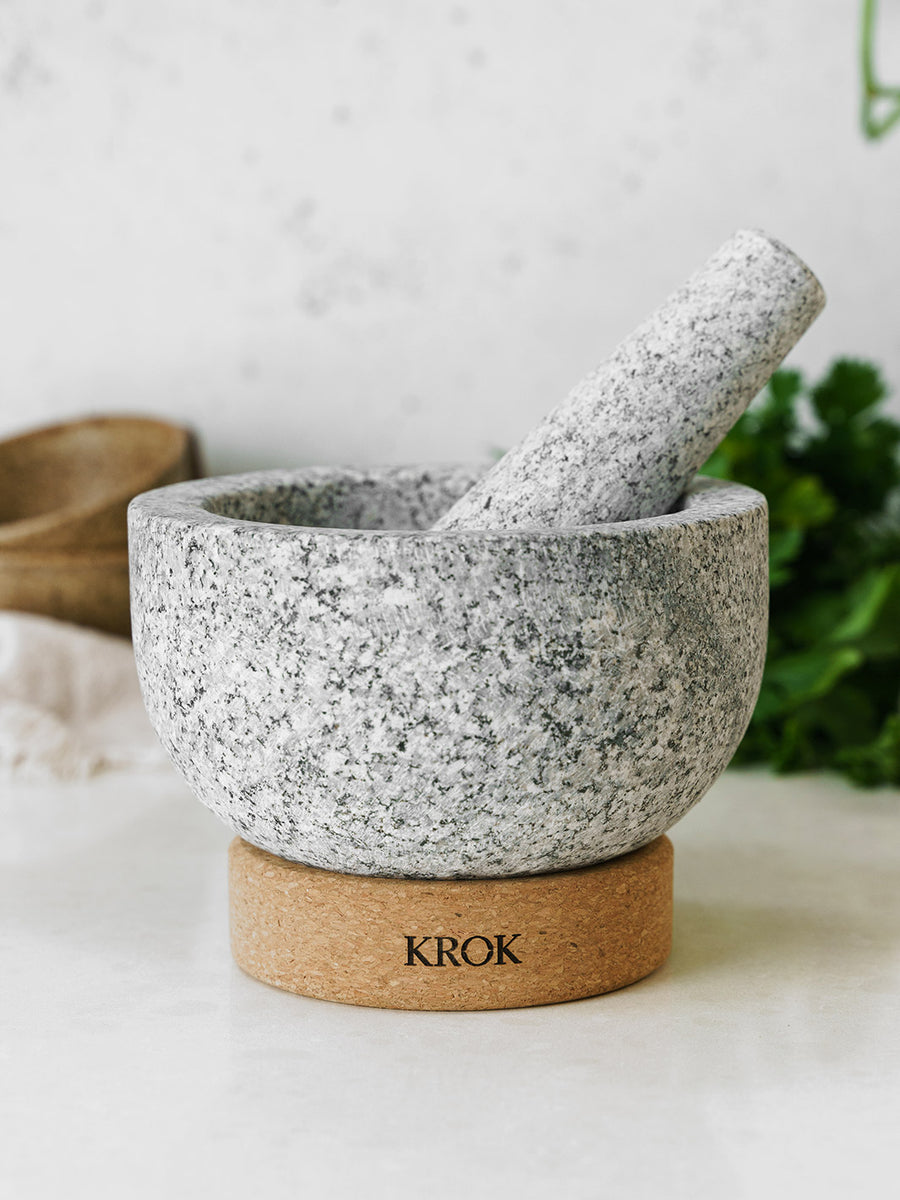
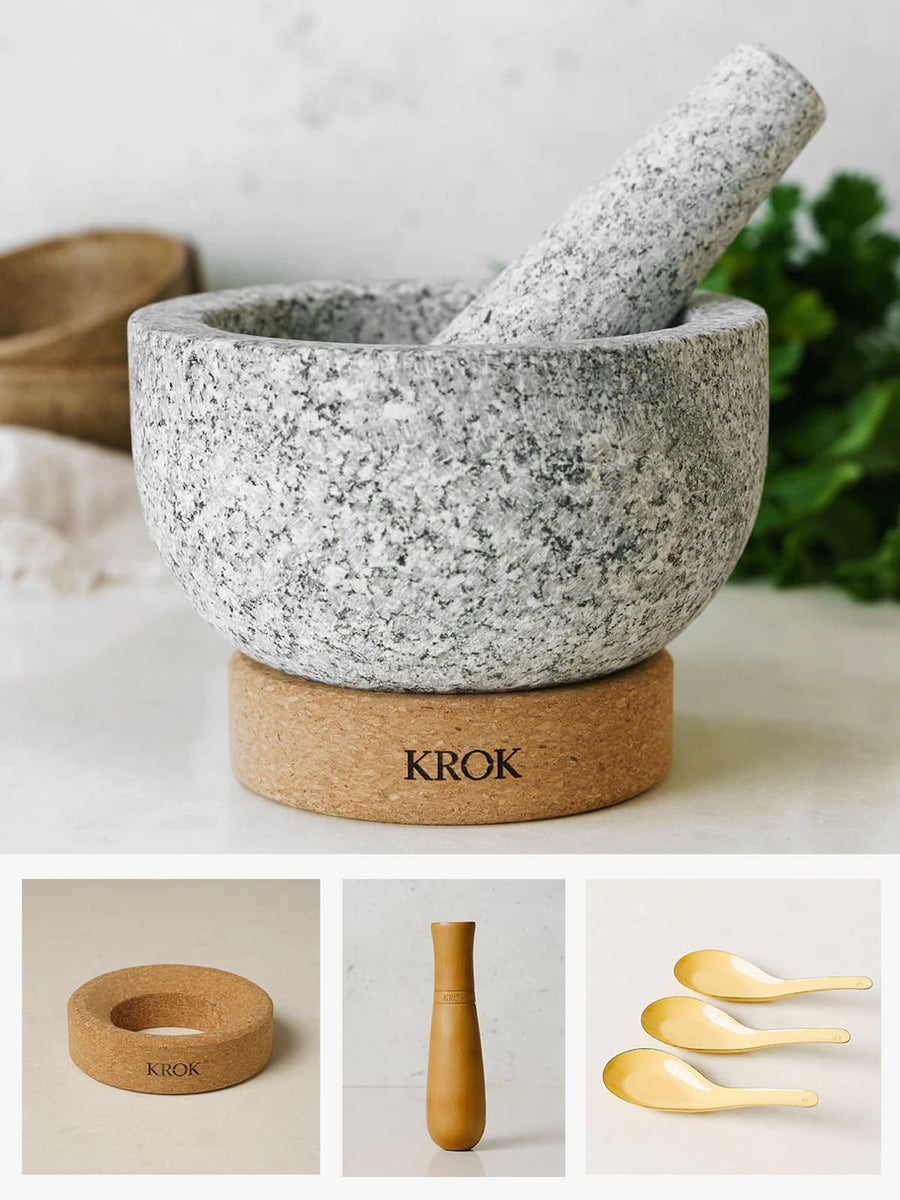
Designed as a modern refinement of the traditional Thai granite mortar, the KROK Mortar and Pestle addresses most of the worries when looking at random mortars on e-commerce sites:
-
Handcrafted Thai Granite: Carved by skilled stonemasons in Ang Sila, Thailand, using dense, high-grade granite built to last generations.
-
Optimized 3-cup Capacity: Built to provide a roomy 3-cup volume while remaining lighter than many standard 2-cup stone mortars by having a thinner wall.
-
Extra-Long Pestle: Custom-designed length to keep your hand comfortably clear of the granite rim during usage.
-
Signature Cork Base: Sustainably harvested cork cushions impact, dampens loud knocking sounds, and keeps the mortar secure on your countertop.
-
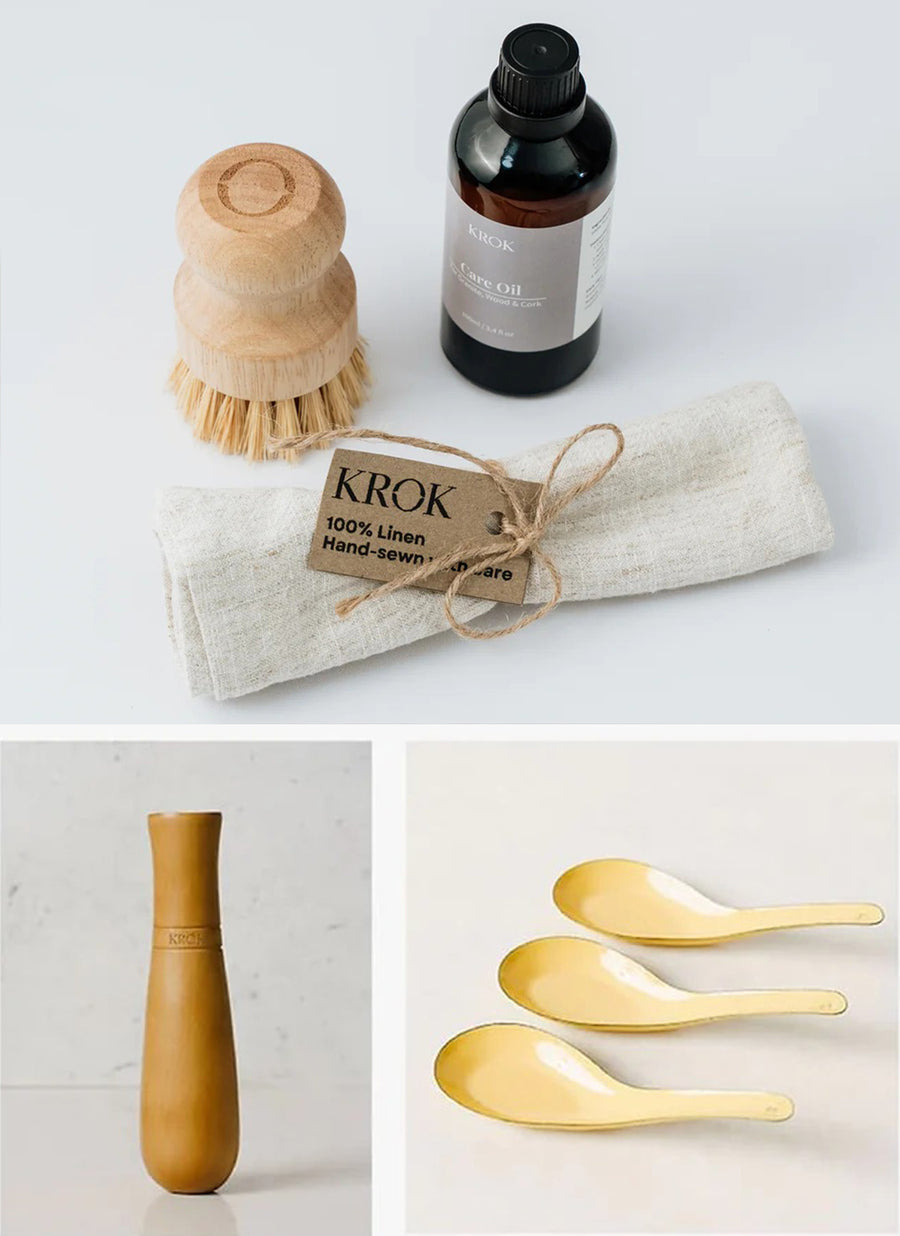
Hybrid Flexibility: The optional KROK Essentials Bundle includes a mango wood pestle, allowing you to switch between heavy granite crushing for curries and spices and light wood swirling for delicate pestos.
Choosing a mortar and pestle shouldn't be a temporary fix. Selecting a 3-cup solid Thai granite mortar ensures you have a versatile, durable, lifetime tool that handles everything from single-spice grinding to complex curry pastes and pestos.
-
To shop for the KROK, bundles, and accessories: KROK Collections
-
For help on technique and how to use the KROK: Guides
-
For all recipes from our global contributors: Mortar and Pestle Recipes
Recipes worth grinding for
One new mortar-and-pestle recipe each week, plus 10% off your first KROK order.


